
📅 Last Updated: April 29, 2026
St. Nicholas Island, locally known as Gemiler Island, is a small island with Byzantine ruins off the coast near the Ölüdeniz Blue Lagoon. Rising steeply from the sea, this narrow limestone island combines historic church ruins, sheltered swimming coves, and wide views across the Fethiye coastline.
Gemiler Island preserves the remains of five Byzantine churches and a wider pilgrimage complex traditionally associated with Saint Nicholas. Scattered across the hillside above the sea, the ruins give the island a rare mix of coastal scenery and Byzantine history, making it one of the most distinctive historic stops around Ölüdeniz and the Fethiye coast.
Most visitors arrive by boat from Ölüdeniz, usually as part of a local day trip. A typical stop gives you time to swim, explore the lower ruins and, if conditions and timing allow, climb higher for panoramic views over the surrounding bays.
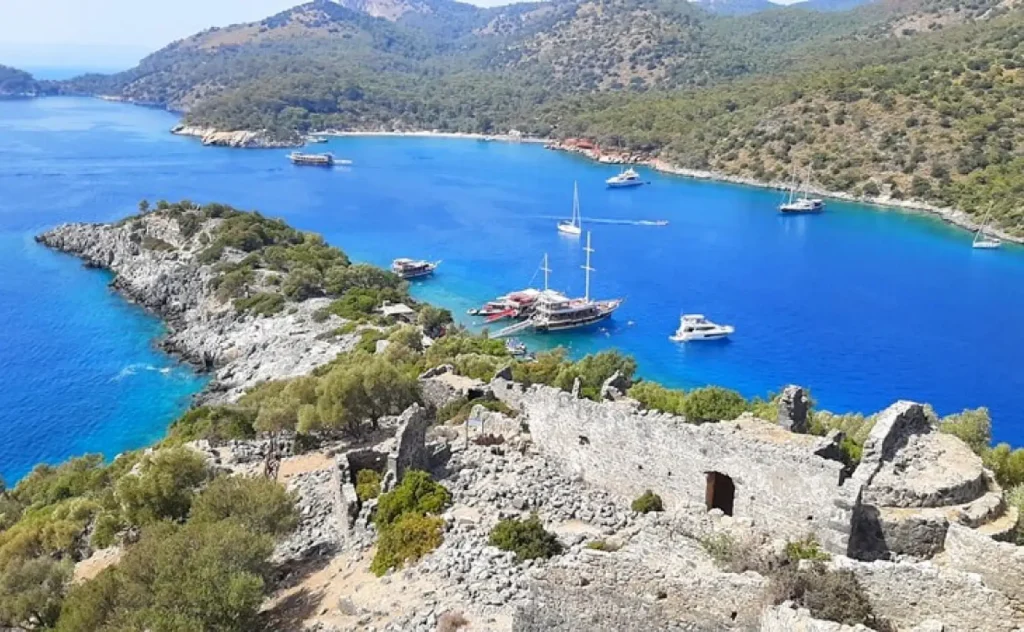
Season: May–Oct • Typical stop: 45–60 min on most boat tours • Fee: 3 € (TL accepted) • Vibe: Historic & scenic
Getting to St. Nicholas Island in 2026
St. Nicholas Island has no road access, so all visits are by sea. Most travellers arrive as part of an Ölüdeniz Boat Trip, with departures from the Ölüdeniz coast and hotel transfers available from many parts of Fethiye. The crossing usually takes around 30 minutes, depending on sea conditions and the day’s route.
A more independent option is to approach from Gemiler Beach on the mainland. In summer, kayaks or canoes may sometimes be available locally, and the short crossing can take around 10–20 minutes in calm conditions. This is more of an adventurous alternative than a standard visitor route, so availability and sea conditions should always be checked on the day.
| Visit Option | What to Expect | Best For |
|---|---|---|
| Daily boat tour | A standard island stop of around 45–60 minutes. | Swimming, lower ruins and a relaxed first visit. |
| Private charter | More flexible timing, with the option to stay longer or arrive later. | Quieter visits, sunset views and photography. |
| Kayak or canoe | A short mainland crossing in calm conditions, depending on local availability. | Active travellers starting from Gemiler Beach. |
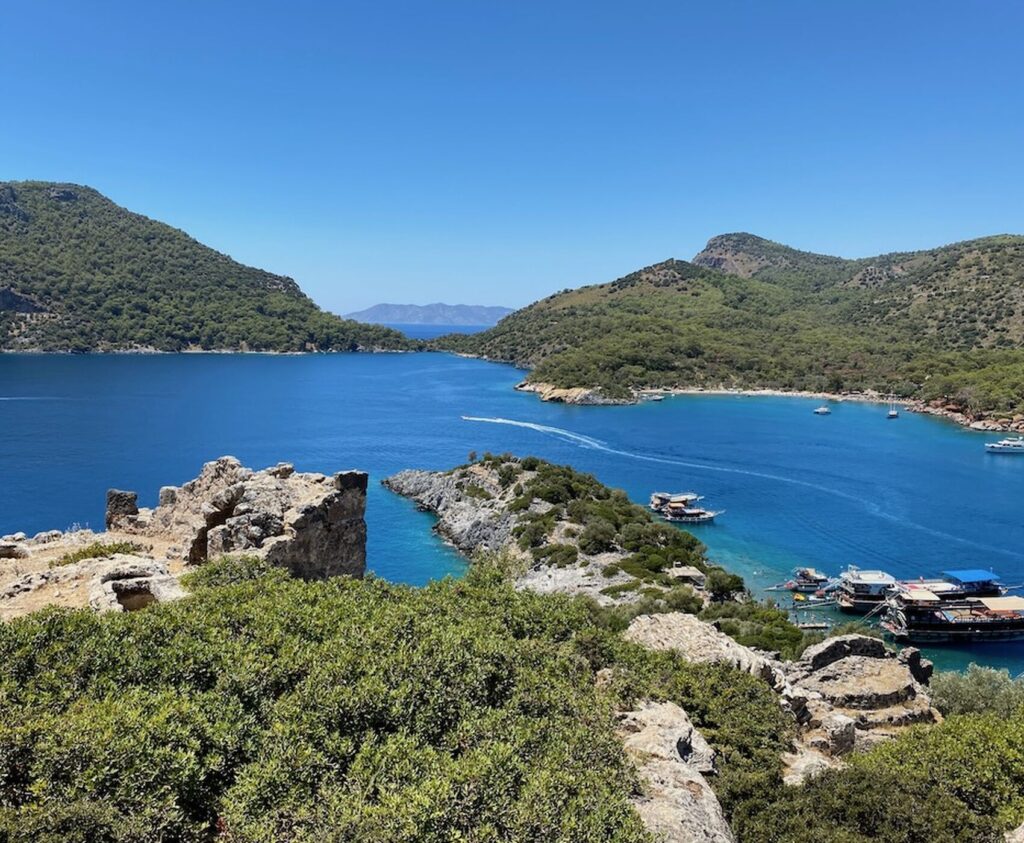
Why St. Nicholas Island Stands Out Among Fethiye’s Historic Sites
What makes St. Nicholas Island especially striking is how much history is concentrated on such a small limestone ridge. The island preserves the remains of five main Byzantine churches, while archaeological surveys — including research by Osaka University — have identified traces of up to 11 religious structures across Gemiler and its neighbouring islets.
This concentration of churches makes more sense when the island is seen not just as a small coastal settlement, but as a maritime sanctuary. In the Byzantine period, the sheltered anchorage around Gemiler would have offered a practical stopping point for boats moving along this stretch of the Mediterranean, especially in difficult weather.
For sailors and pilgrims, the island also carried spiritual meaning. A religious site associated with Saint Nicholas — long regarded as the protector of sailors — would have been a natural place to pause, pray and seek protection before continuing along the coast.
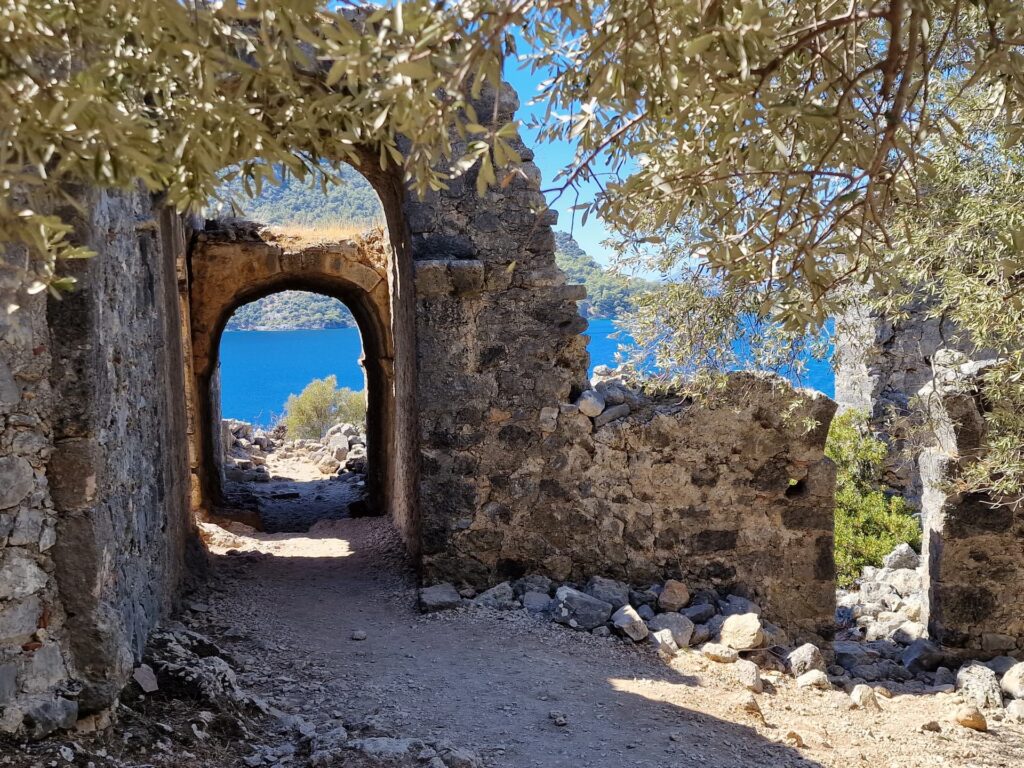
One of the island’s most distinctive features is the 350-metre covered processional corridor, a stone-arched route linking churches across the hillside. Today, parts of this historic passage form a scenic walking route between swimming coves and higher ruins overlooking the coast.
The site still feels open and lightly restored, with ancient walls, terraces and rock-cut features spread across the slope. As you climb higher, you may notice wild olive trees, carob trees and hardy Mediterranean vegetation around the paths, while goats are a familiar sight wandering between the ruins and terraces. This mix of sacred architecture, seafaring history, short uphill walks and wild island atmosphere is what makes Gemiler feel so different from other historic stops around Ölüdeniz.
Key Ruins & What to Look For
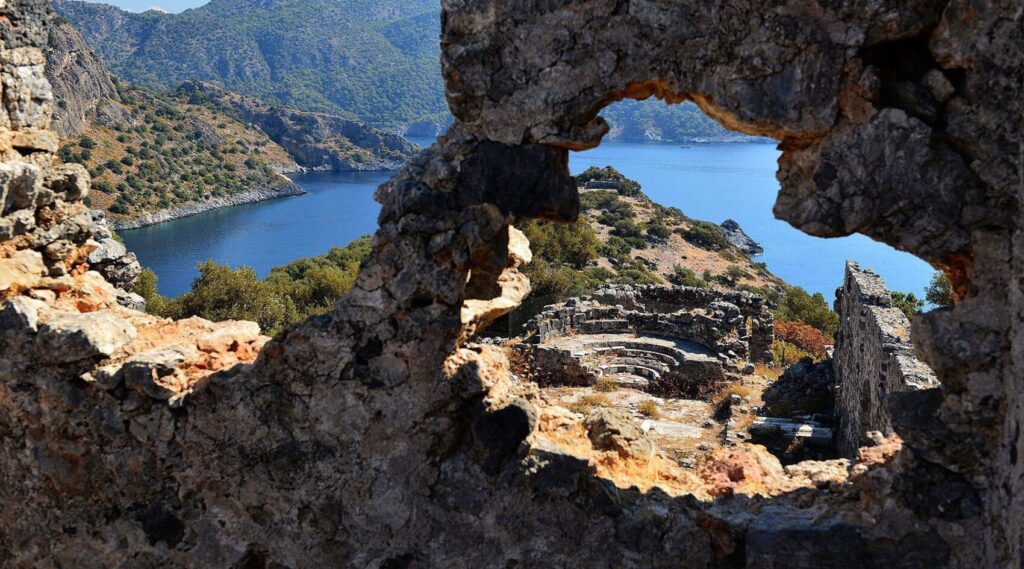
1. The Arched Processional Corridor
This 350-metre corridor is one of the island’s most distinctive ruins. Walking beneath the surviving arches gives a sense of how pilgrims once moved between the churches scattered across the hillside.
2. The Sunken Harbour & Snorkelling
Along parts of the island’s northern and north-western shoreline, sections of the old harbour area now lie partly underwater. This is usually the most interesting area for snorkelling, especially in clear conditions when the sea is calm.
Swimmers and snorkellers can often spot submerged stone blocks, fragments of former harbour structures and, in some areas, shaped architectural pieces such as Byzantine column capitals beneath the surface. Visibility is often better earlier in the day, before the busiest boat traffic arrives.
The bay is often calm enough for an unhurried swim, but the shoreline is rocky and the landing area can become busy when several boats arrive at once. Water shoes can make getting in and out of the water much easier.
3. The Summit, Lighthouse & Ancient Mosaics
Higher up the island, the larger church ruins open onto some of the widest views across the surrounding coastline. If you look carefully at the surviving floor sections, you may still notice fragments of Byzantine geometric mosaics, offering a small but striking glimpse of the site’s former decorative detail.
If you continue to the highest point, you will reach the small lighthouse near the summit. This is one of the island’s best spots for late-afternoon views, with a broad panorama across the sea, nearby headlands and the mountains behind Ölüdeniz. The climb usually takes around 15–20 minutes and feels moderate for most travellers, though the upper paths often feel noticeably quieter than the busy shoreline below.
4. Small Details Inside the Main Church
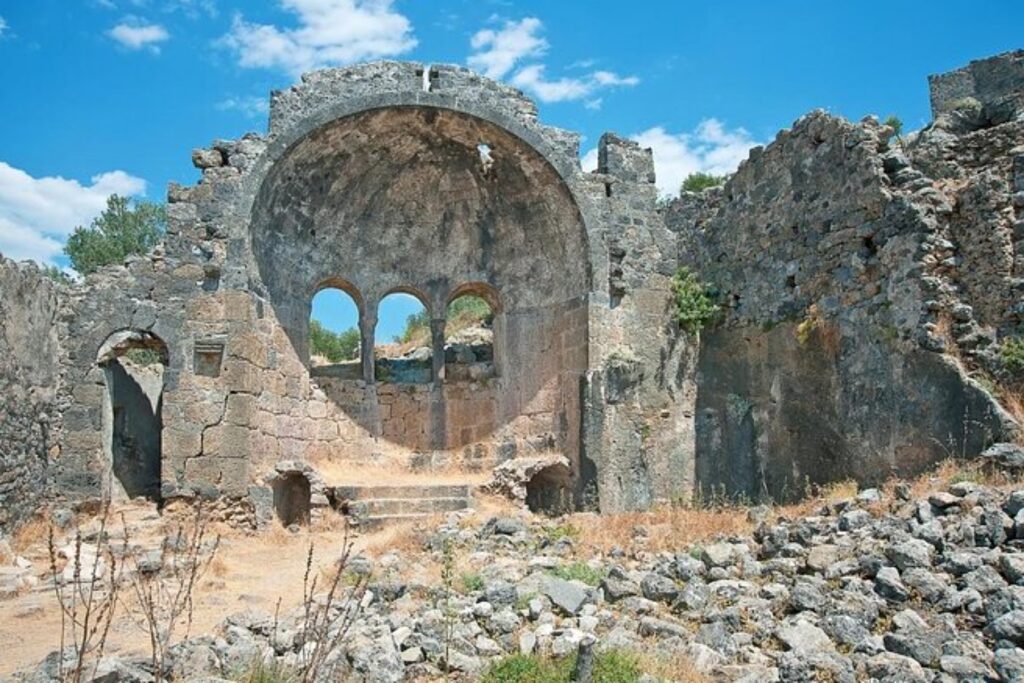
Inside the apse of the main church, look for two small details that connect the island to its seafaring and pilgrimage past: a hollow cross-shaped recess and a carved ship engraving. Archaeological studies suggest the recess may have served as a reliquary niche for sacred objects, while local stories add a more dramatic layer to the site’s history.
The nearby ship graffiti is one of the island’s more intriguing details. Some local traditions associate it with sailors and later stories surrounding the transfer of Saint Nicholas’ relics to Bari. Whether seen as a mariner’s mark, a pilgrim’s trace or part of the island’s layered folklore, it adds another point of interest to the ruins.
5. The Great Cisterns & Daily Life on the Island
Another striking feature is the network of large stone-cut cisterns scattered across the hillside. These helped store fresh water for the religious settlement and for the people who passed through the island’s sheltered anchorage. Together with terraces, rock-cut spaces and the remains of former buildings, they give a clearer picture of how this small Byzantine site once functioned in practical daily life.
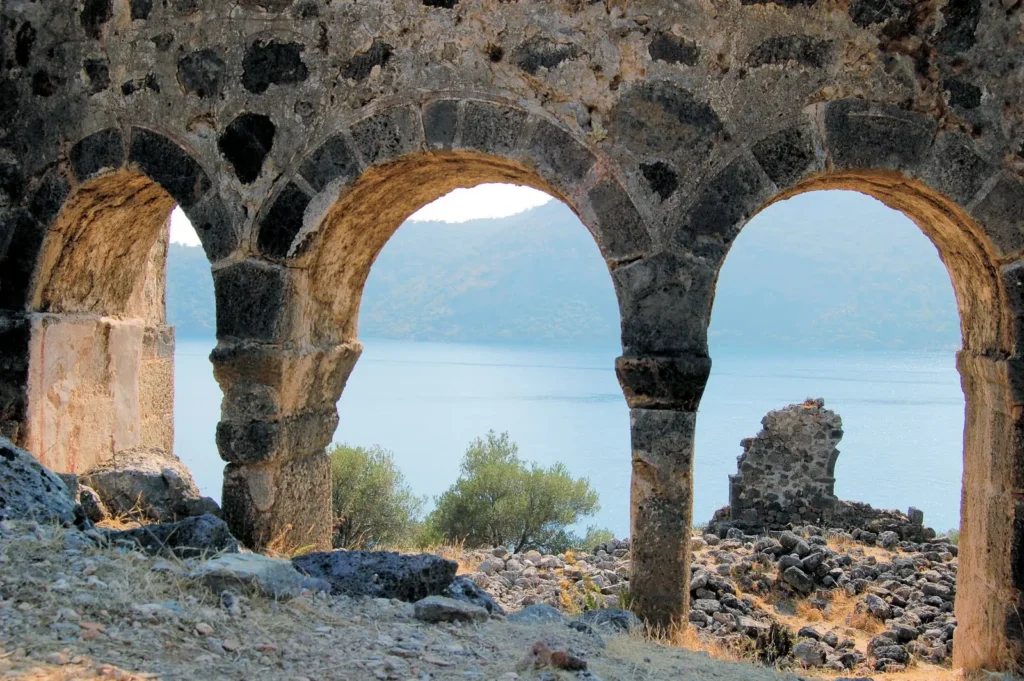
St. Nicholas Island and Its Link to Saint Nicholas
While Myra, modern-day Demre, is the place most closely associated with Saint Nicholas, Gemiler Island is also widely linked to his story. The island’s sheltered position, church ruins and coastal setting suggest that it was an important stop for travellers and pilgrims moving through this part of the eastern Mediterranean.
Over time, Gemiler developed into a notable Byzantine religious site, with several churches and associated structures spread across the ridge. Its maritime setting also helps explain the connection with Saint Nicholas, who was long regarded as the patron saint of sailors.
That coastal connection still feels relevant today through the Lycian Way. Many hikers pass through Kayaköy before continuing towards Gemiler Beach on foot. From there, some visitors cross to the island, linking one of the region’s best-known walking routes with one of its most atmospheric historic sites.
Best Time to Visit
- 08:30 – 11:00: Best for walking the ruins before the heat builds and the main tour boats begin to arrive.
- 11:30 – 15:00: Better for swimming, though this is usually the busiest part of the day around the landing area.
- 30 minutes before sunset: Best for softer light, quieter views and a more atmospheric walk around the upper ruins.
How Long to Explore the Island
Most visitors spend around 45–60 minutes on St. Nicholas Island during a standard boat tour stop. This is usually enough time for a short walk through the lower ruins, a quick swim and a brief look at the main remains near the landing area. If you want to reach the upper church ruins and lighthouse viewpoint, it helps to use your time carefully from the moment you arrive.
The uphill walk usually takes around 15–20 minutes, depending on your pace and the heat of the day. The higher sections are quieter than the shoreline, so they are worth prioritising if you prefer scenery and ruins over a longer swim stop.
💡 Local Tip: If your stop is short, walk clockwise around the island before climbing higher. This route is usually less steep than going straight uphill from the landing area, and it gives you better coastal views on the way to the upper ruins.
Practical Tips & Safety
- 👟 Footwear: Sturdy trainers are recommended for the rocky and uneven paths.
- 🌊 Water shoes: Useful for swimming around the harbour area, where submerged stones can be slippery.
- 💧 Bring water: There are no facilities on the island, so it is best to arrive prepared.
- 🗑️ Take your litter back: The island is a protected historic site with no facilities, so do not leave anything behind.
- ⛰️ For quieter views: Most boat passengers stay near the shore, so the upper ruins are often calmer even during busy periods.
- 🚤 For swimming: The landing area can feel crowded when several boats arrive at once, so the northern side often offers more space in the water.
Frequently Asked Questions
How do you get to St. Nicholas Island? The island can only be reached by boat. Most visitors arrive as part of a boat trip from Ölüdeniz, while more independent visitors may be able to approach from Gemiler Beach, depending on local boat or kayak availability.
Is there an entrance fee? Yes. The archaeological site entrance fee is 3 €, with payment usually accepted in Turkish Lira as well. Bringing some cash is sensible, especially as mobile signal can be weak around the island.
How long do boat tours usually stop here? Most standard boat tours allow around 45–60 minutes on the island. That is usually enough for a short walk through the lower ruins, while longer visits are easier with a private boat or a more flexible schedule.
Is the island difficult to explore? The terrain is rocky and uneven, so sturdy footwear is recommended. Most visitors can manage the lower ruins easily enough, but the climb to the upper sections is better suited to those comfortable with short uphill walks.
Planning Your Visit with Fethiye Tours
St. Nicholas Island brings together coastal views, Byzantine ruins and a short but rewarding walk in a single stop. Whether you visit as part of a boat trip from Ölüdeniz or include it in a wider day around Gemiler Beach and the surrounding coast, it offers a memorable mix of history and scenery. For practical local advice before you go, our team is happy to help.
Our local team verifies trail conditions and visitor details regularly. For booking or quick tips, chat with us on WhatsApp.
