
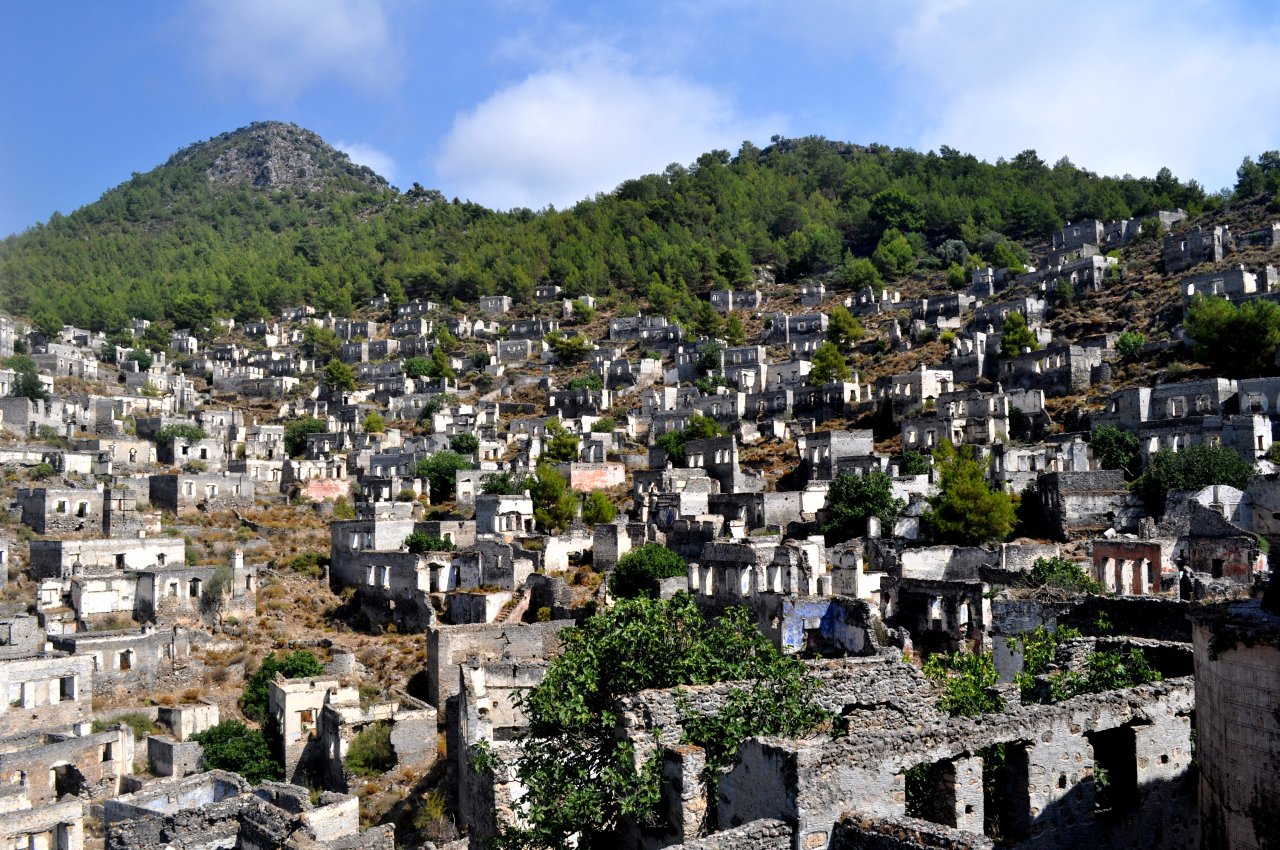
You might know it as Fethiye’s “Ghost Town”, but for centuries this hillside village was simply Levissi. Today, Kayaköy (Levissi) is one of the area’s most striking heritage sites: an abandoned Greek settlement of 500+ roofless stone houses, left behind after the 1923 population exchange.
Just a short drive from Fethiye town centre, Kayaköy invites visitors to walk through narrow stone lanes, past former homes, chapels and courtyards that still preserve the layout of a once-thriving community. What surprises many first-time visitors is the scale: this is not a single ruin, but an entire abandoned settlement spread across the hillside.
How to Reach Kayaköy from Fethiye
Kayaköy (Levissi) is easy to reach from central Fethiye, whether you are travelling by dolmuş (local minibus) or by car. By minibus, the journey usually takes around 20–25 minutes, depending on traffic and how many stops are made along the route.
Dolmuş services to Kayaköy run regularly during the day and are usually picked up from two main points in Fethiye:
- Behind the Yeni Hamidiye Mosque (White Mosque) in the town centre.
- Behind the main Fethiye Otogar (bus station).
If you prefer to drive, Kayaköy is about 8 km from Fethiye and usually takes around 15 minutes via the Hisarönü road. Parking is generally available near the village entrance and along the lower road where most of the cafés and restaurants are located.
For most visitors, the dolmuş is the simplest option if you are staying in central Fethiye, while driving gives you a little more flexibility if you plan to combine Kayaköy with Hisarönü or Ölüdeniz on the same day.
If you are timing your visit by season, see our Fethiye Weather & Climate Guide.
Kayaköy is highly rewarding to explore, but the site is rough underfoot and more exposed than some visitors expect. These are the practical points most worth knowing before you enter:
• Footwear: Expect uneven stones, loose ground and steep steps throughout the site. Sturdy trainers or hiking shoes with good grip are strongly recommended; sandals and flip-flops are not suitable here.
• With young children: The site is not pushchair-friendly. If you are visiting with an infant, a baby carrier or sling is the only practical option.
• Heat and shade: Shade becomes very limited once you start climbing through the ruins. In July and August, a late afternoon visit is usually the most comfortable choice and helps you avoid the strongest midday sun.
The History of Levissi
Kayaköy’s story begins long before the abandoned stone houses seen today. Archaeological remains in the surrounding area, including Lycian sarcophagi, suggest that these hills were inhabited as early as the 4th century BC.
The village flourished much later, especially in the 18th and 19th centuries, when it was known as the Greek settlement of Levissi. Its houses were built in tiers across the hillside so that one home would not block another’s sunlight or view — a practical layout that suited life on a steep slope while leaving the fertile land below available for cultivation.
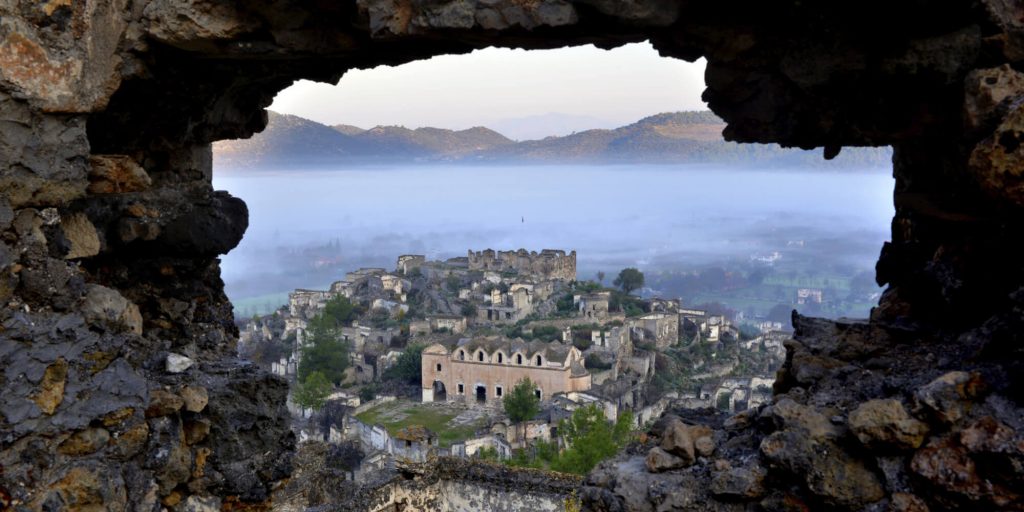
Levissi’s history changed sharply in the early 20th century. Following the 1923 population exchange between Greece and Turkey, its Greek residents left, and the village was gradually abandoned. British readers may also recognise Kayaköy as the real-life inspiration for Eskibahçe in Louis de Bernières’ novel Birds Without Wings.
Today, Kayaköy is protected as an open-air heritage site. The roofless houses and stone lanes still convey the scale and structure of the community that once lived here.
Architecture Details to Look For
Kayaköy is best explored slowly. As you move through the narrow lanes, small architectural details begin to show how daily life was adapted to a steep hillside setting.
- Rounded corners: In the tighter stone lanes, many corners are softly rounded. This made it easier for people and pack animals to pass through narrow spaces.
- Tiered house layout: The houses were built in tiers so that one home would not block another’s sunlight or view. It is one of the clearest signs of how carefully the village was planned on the slope.
- Rainwater cisterns: Without a central water supply, many homes depended on underground cisterns that collected rainwater from the roof. Take care: some openings may be partly hidden by stones or grass, so it is best to watch your footing and keep children close.
- Stone window frames: Look for the rectangular stone surrounds that once held wooden shutters and doors. Even where the roofs have gone, these details still help define the original layout of the houses.
Upper Church & Cold Water Bay View
The Upper Church (Yukarı Kilise) is one of the most rewarding points in Kayaköy, both for the view and for the sense of scale it gives the site. A full loop through the village, including the upper section, usually takes around 1.5 to 2 hours, depending on your pace and how often you stop.
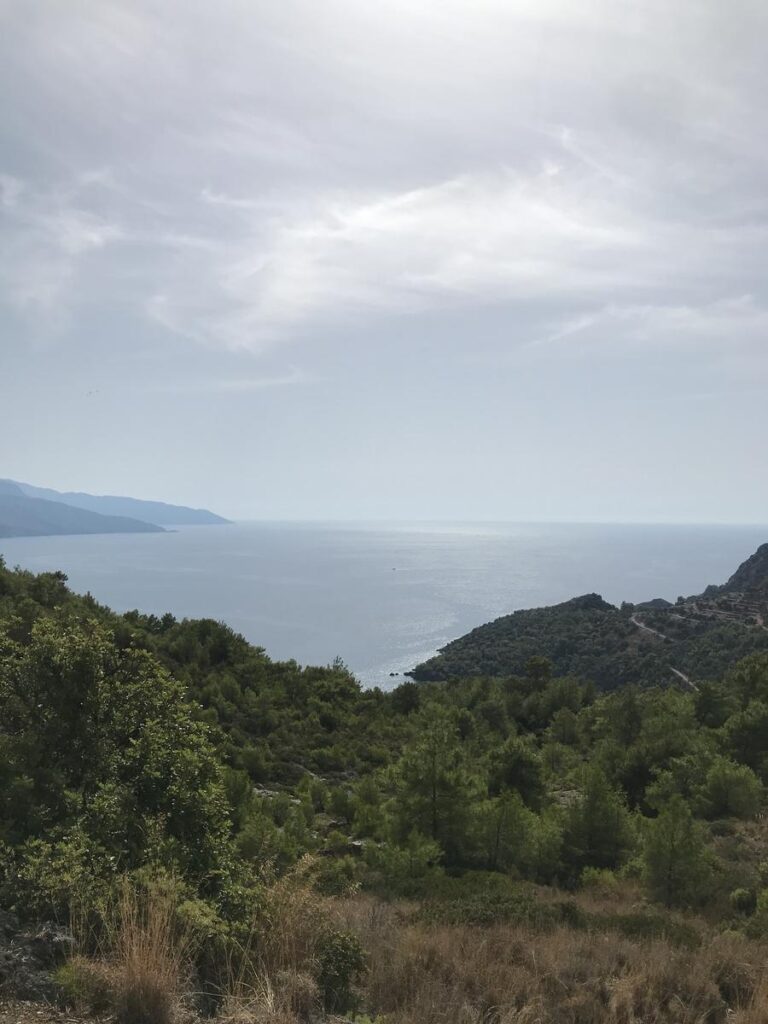
From here, you can look back over the cluster of roofless stone houses below and, on a clear day, out towards Soğuk Su Koyu (Cold Water Bay) in the distance. Late afternoon usually works best for photos, as the lower sun gives the stone houses more texture and softer contrast.
The upper part of the site also feels quieter and more exposed, especially on breezy days when the wind moves through the empty stone frames and open window spaces.
Hiking from Kayaköy to Ölüdeniz
If you want to extend your visit beyond the village itself, a marked trail continues from the Upper Church area towards Ölüdeniz. The walk usually takes around 1.5 hours one way, depending on pace, weather and trail conditions, with occasional views of the coast between the hills.
- Look for the yellow and red waymarks painted on rocks along the route.
- Carry at least 1.5 litres of water per person, especially in warmer months.
- In summer, it is best to start earlier and avoid walking in the midday heat.
Local Atmosphere: Cafés & Village Flavours
After walking through the ruins, most visitors end up back along the lower village road, where cafés and small local restaurants provide an easy place to sit down and take a break. Today, Kayaköy is better known for its garden cafés and traditional gözleme houses than for any large-scale visitor scene.
Many of these places are set in shaded courtyards among olive trees and old stone walls. A stop here for gözleme, a cold drink or a simple Turkish coffee feels like a natural end to a visit, especially after the heat and uneven paths of the site itself.
The atmosphere is usually quiet and unhurried, and it is common to see local cats wandering between the tables while people rest in the shade before heading back towards Fethiye.
Frequently Asked Questions
- Is Kayaköy worth visiting? Yes. Kayaköy is one of the most distinctive heritage sites near Fethiye, with roofless stone houses, hillside views and a strong sense of local history that makes it well worth visiting.
- How long do you need in Kayaköy? Most visitors spend around 1.5–2 hours exploring the site, including the Upper Church viewpoint. A slower visit with breaks and photos can take longer.
- Is Kayaköy difficult to walk around? In places, yes. Expect uneven stones, steep sections and rough ground, so sturdy footwear is important.
- Can you visit Kayaköy without a car? Yes. Dolmuş minibuses run from central Fethiye and the main bus station, making it easy to visit independently.
- Are there toilets or cafés inside the site? Once you pass the ticket gate, there are no toilets or kiosks inside the archaeological area. Cafés and restaurants are located along the lower village road outside the entrance.
Kayaköy is easy to combine with other places around Fethiye on the same day. Many visitors pair it with the Amyntas Rock Tombs, or continue later towards the Babadağ Cable Car or Ölüdeniz, depending on the time of day and season.
Plan a Private Tour →