
Last Updated: May 2, 2026
Afkule Monastery is a cliffside ruin near Kayaköy, reached by an uneven walking route with a steep and exposed final descent. It is best approached as a quiet countryside walk with a small historic site at the end, rather than a quick roadside viewpoint.
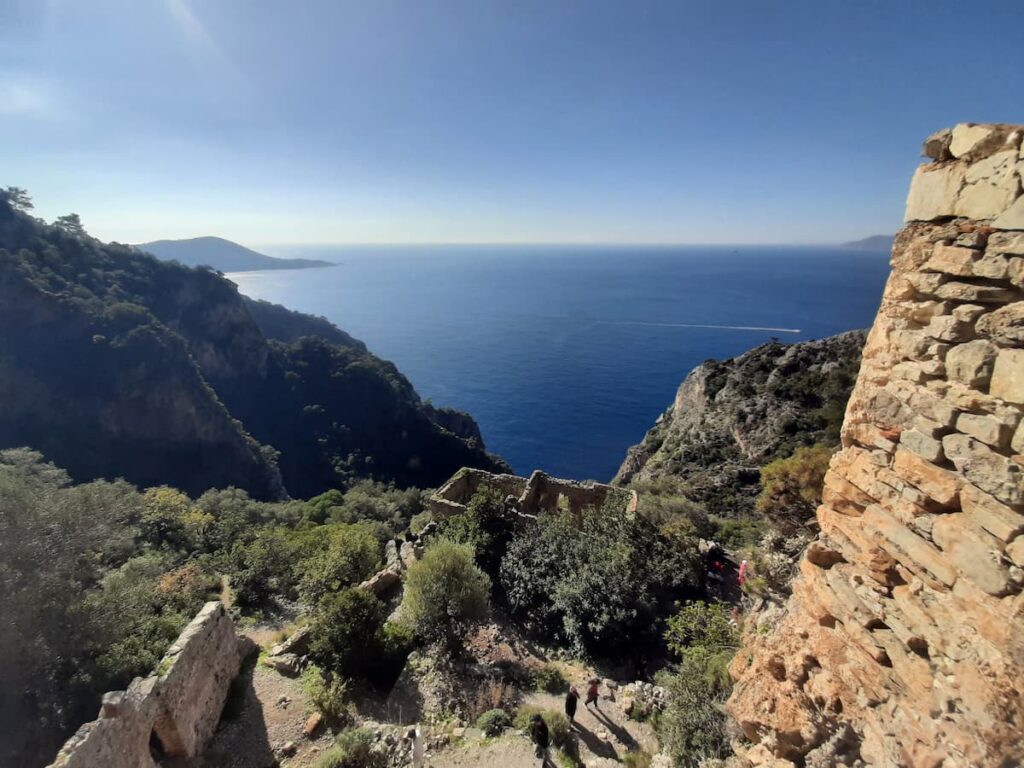
The walk starts quietly through pine forest, with only occasional hints of the coast at first. In spring and early summer, the route can smell of pine, warm earth and wild thyme.
Near the final section, the trees open, the ground drops away and Afkule appears on the cliff face above the sea. The site suits visitors who enjoy quiet ruins, sea views and short but uneven countryside walks. In this guide, you’ll find how to get there from Kayaköy, what the walk is like, the best time to visit and who may want to think twice before going.
Quick Planning Notes
- Location: Coastal hills above Soğuksu Bay, near Kayaköy.
- Access: Kayaköy or the Afkule turn-off on the Kayaköy–Gemiler road.
- Entry Fee: Free (No ticket booth).
- Difficulty: Moderate; involves a steep, rough, and exposed final descent.
- Visit Time: 1 hour (from forest track-end) or 3 hours (from Kayaköy village).
- Best Time: Morning or late afternoon. (Note: Avoid returning after dark).
- Facilities: None. Bring water and essentials before you start.
- Not Ideal For: Pushchairs, wheelchairs, very young children, or those with vertigo.
Where Is Afkule Monastery?
Afkule Monastery is located near Kayaköy Ghost Town, on the hilly coastline between Kayaköy and Gemiler. Although it is sometimes mentioned together with Gemiler Island, Afkule itself is not on the island. It is on the mainland, above the rugged slopes facing the sea.
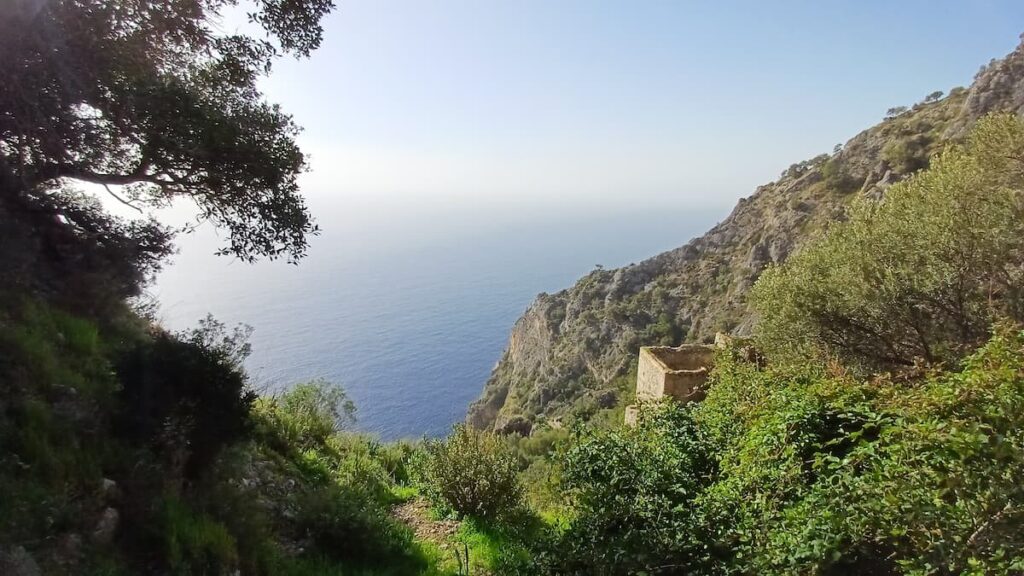
Afkule sits between inland Kayaköy and the coast near Gemiler, reached by forest tracks, old paths and exposed cliffside sections. As the route moves closer to the sea, the views open suddenly across the coastline; on a clear day, Rhodes may be visible in the distance.
Although Afkule is not far from Fethiye, it does not feel like a typical quick viewpoint or roadside stop. There are no cafés at the ruins, no ticket office, no handrails around every viewpoint, and no organised visitor route once you reach the final cliff section. Take your time here and move carefully, especially near the exposed edges.
What Is Afkule Monastery?
Afkule is a small rock-cut religious structure built into a steep cliff face. In Turkish, it is also known as Af Kule or Çileler Manastırı, often translated as the Monastery of Trials or Suffering. The name makes sense when you see the place: it feels isolated, difficult to reach, and chosen for solitude rather than comfort.
The structure is generally associated with the early Byzantine period, often placed around the 5th or 6th century, although exact dating is difficult. Local tradition connects the site with a hermit monk named Hagios or Ayios Eleftherios, who is said to have carved the space into the rock and lived there in seclusion. This is best treated as local tradition rather than a proven historical account.
The building itself is small, roughly around 10 square metres, with two levels and rooms cut into the rock. Do not expect grand decoration inside. The interest is in the setting, the rock-cut spaces, the internal steps, the water-storage chamber and the rough openings facing the sea. Nearby remains are sometimes linked with a small chapel or later religious use, but the site today is fragmentary and weathered.
Worth knowing: Afkule is sometimes compared with a miniature version of Sumela Monastery because of its cliffside position. The comparison is useful only for the drama of the location. Afkule is much smaller, more ruined and far less managed, so it should not be imagined as a large restored monastery complex.
How to Get to Afkule Monastery from Fethiye
From Fethiye, reach Afkule by travelling first to Kayaköy, then continuing towards the Gemiler road and the Afkule turn-off. Kayaköy is the easiest place to orient yourself before the road becomes more rural and the final approach continues on foot.
Afkule Monastery Map
Use the map as a general location guide, but remember that the final approach is on foot. The Google Maps pin may bring you close to the rough road or viewpoint area; from there, follow the walking path carefully towards the cliffside ruins.
By dolmuş
To visit Afkule by dolmuş, take the Fethiye–Kayaköy minibus first, then continue on foot towards the Afkule sign and forest track. In summer, services are usually more regular because the Gemiler Beach route is busier. Ask whether the minibus continues towards Gemiler or stops in the village area, as this affects how far you need to walk.
This is the cheapest way to get close to Afkule, but it takes more patience than driving. Check the return dolmuş times before you start walking, especially outside peak summer or late in the afternoon. Mobile signal can be patchy in the hills, so do not rely only on checking schedules online once you are already on the trail.
By car
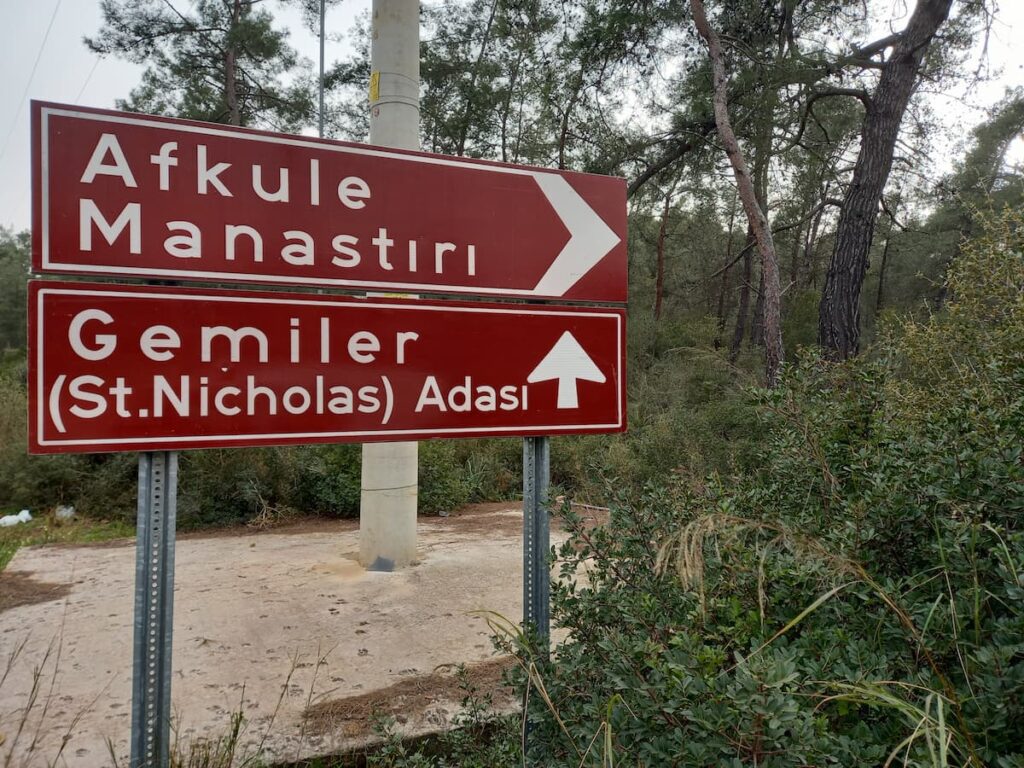
A car makes the visit easier, mainly because you are not tied to dolmuş times on the way back. From Fethiye, follow the road to Kayaköy, then continue towards Gemiler. After leaving the main village area, watch for the Afkule sign on the right-hand side of the road. It is easy to miss if you are moving too quickly, so slow down on this section and keep offline navigation open as a backup.
After turning off the Kayaköy–Gemiler road, the route becomes a rough forest track. Depending on road conditions and your vehicle, you may be able to continue a little further, but do not assume you can drive close to the monastery itself. If you have a low car, it is usually better to park earlier and walk the extra distance, especially if the stony track looks uneven.
At the end of the drivable section, park without blocking the track or any local access route. From there, the rest of the visit is on foot. The final approach to the monastery is not suitable for vehicles.
For visitors who prefer not to drive: Afkule can also be visited with a private transfer or a locally arranged vehicle from Fethiye, Kayaköy or Ölüdeniz. This can be a more comfortable option if you do not want to deal with rough forest tracks, parking, dolmuş return times or finding the turn-off on your own.
For families, couples or visitors who prefer a slower and more relaxed day, a private transfer can make the visit easier. You can be picked up from your accommodation, travel towards the Kayaköy–Gemiler road, and continue the final part on foot without worrying about the return drive. The Fethiye Tours team can help arrange a safe, family-friendly transfer, especially for guests who want to combine Afkule with Kayaköy, Gemiler or Ölüdeniz on the same day without rushing the visit.
The Walk to Afkule: What to Expect
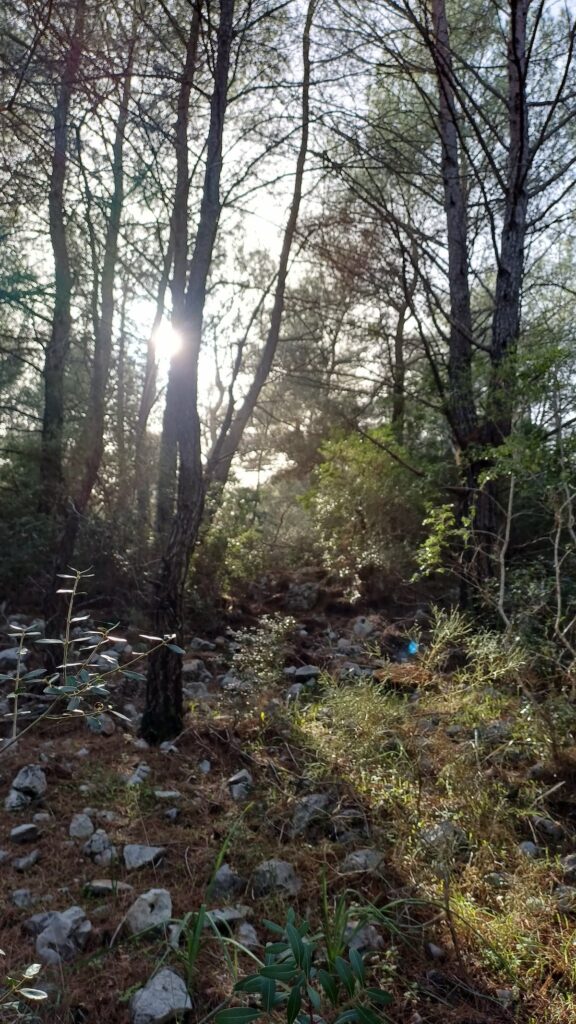
The first part of the walk is usually the easiest. The track leads through pine forest, with shade in many places and occasional views back towards the hills. In spring, this section can be especially enjoyable, with wildflowers, green slopes and cooler air.
Spring and early summer are also the best times to notice the natural side of the route. Along the forest track, you may see low wildflowers, wild herbs, butterflies and small birds moving between the pines. Near the more open cliffside sections, larger birds sometimes glide on the rising warm air, adding to the quiet and remote feeling of the walk.
How long the walk takes depends on where you start. If you drive close to the end of the rough forest track, the viewpoint or ruins are usually around 15–30 minutes away on foot. If you start from Kayaköy village, park earlier because of road conditions, stop often for photos, or need extra time to find the correct path near the end, the visit can take much longer.
The distance can be misleading. Some signs and local descriptions make it sound like a short walk, but the route feels longer once you add the uneven ground, the climb and the final descent. It is not a long hike, but it is not a simple flat path either.
You may see painted red and yellow marks, arrows or informal stone markings along the way, but do not rely on them completely. Tracks can fade, stones can move, and rural signs are not always maintained. Download an offline map before setting out, or save your route in advance.
Pay close attention when you reach the open viewpoint area. Afkule is not simply at the highest point of the hill, so if you feel as if you are climbing endlessly, stop and re-check your direction. After the forest section, the route usually continues down towards the cliffside ruins. This is where the walk becomes steeper, rougher and more exposed.
Safety note: The final descent is the part to take seriously. Loose stones, smooth rock, uneven steps and exposed edges can make the ground slippery, especially after rain or in dusty summer conditions. Take your time here and wear shoes with good grip rather than flip-flops or smooth sandals.
In summer, carry more water than you think you need. The distance is not huge, but heat, dust and the return climb can make the walk feel harder than expected.
Is Afkule Suitable for Everyone?
Afkule is not a standard sightseeing stop. It is best for visitors who are comfortable walking on uneven ground and understand that the site is not fully protected or supervised. The view is the reason many people make the effort, but the final section needs care and sensible judgement.
It is not suitable for wheelchairs or pushchairs. It is also not a good choice for very young children who may run ahead near edges. Families with older children who are used to walking may enjoy it, but adults should stay especially close during the final section.
Anyone with knee problems, balance concerns, vertigo or a strong fear of heights should think carefully before going all the way down to the ruins. You do not have to climb into every part of the site to enjoy the setting. The views from the safer open areas nearby can still be enough.
If you are travelling alone, let someone know where you are going and avoid visiting close to sunset unless you are sure you can return in daylight. The route feels peaceful, but it is still a rural walking path with limited help nearby and unreliable phone signal.
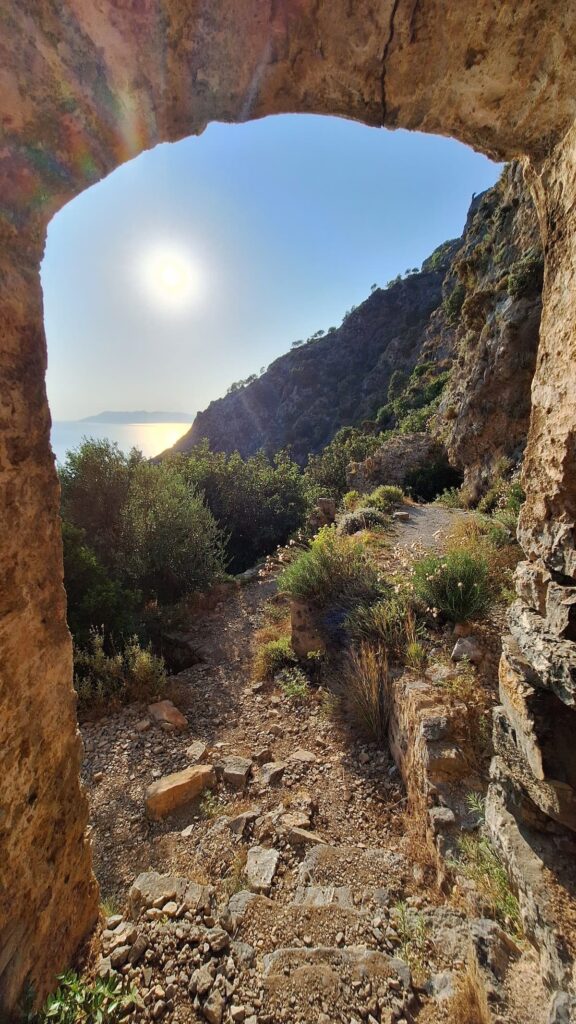
Best Time to Visit Afkule Monastery
The best time to visit Afkule is usually in the morning or late afternoon. Morning is better for a cooler walk, quieter track and softer light over the hills. Late afternoon is better for photos, especially when the sun starts to warm the cliff face and the sea takes on a deeper blue.
Sunset can be beautiful at Afkule, but it needs careful timing. The view is often at its best late in the day, but the return route still passes through forest, loose stones and uneven ground. If you go for sunset, give yourself enough time to enjoy the view and walk back before the path becomes difficult to follow.
Midday in July and August is the least comfortable time to visit. The forest gives some shade, but the heat can build quickly, and the return walk may feel harder than expected. In peak summer, it is better to start early or go later in the day, wear a hat, and carry plenty of water.
Spring is one of the nicest seasons for this walk. The Kayaköy countryside is greener, temperatures are milder, and the route feels softer and more comfortable than it does in peak summer. Autumn can also be excellent, especially after the strongest summer heat has passed. Winter visits are possible in dry weather, but the paths can be slippery after rain, and transport options may be less frequent.
What Afkule Feels Like in Practice
Afkule can feel more demanding than it looks on the map. If you start near the rough parking area, the walk may not be long, but the uneven ground, the final descent and the exposed cliffside setting make it feel more serious than a normal sightseeing stop.
The route builds gradually. First, the path passes through quiet pine forest; then the sea opens below, and the cliffside ruin comes into view near the final section of the walk. For many visitors, the strongest impression is not the size of the structure, but the silence, pine trees, open horizon and unusual position of the monastery in the rock.
It is best to treat Afkule as a short countryside walk with one serious final section, not as a quick roadside viewpoint. Go slowly, keep your route saved offline, carry enough water and leave enough daylight for the walk back.
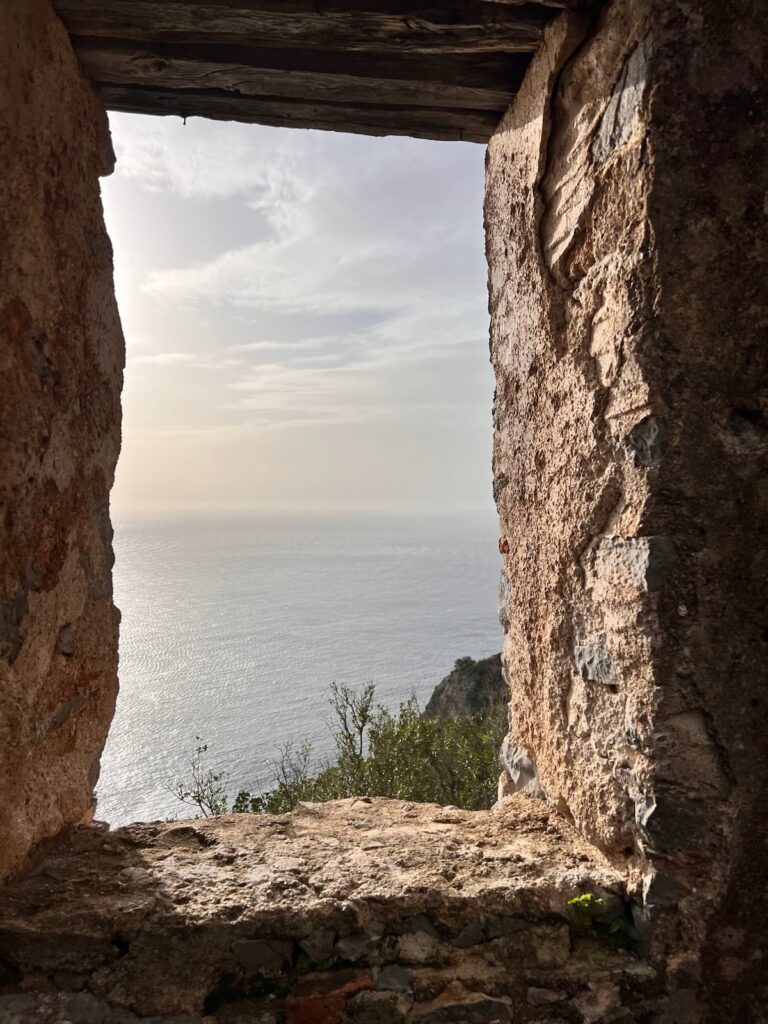
What You’ll See at the Ruins
Do not expect a large restored monastery complex. Afkule is small, rough and partly ruined, which is part of what makes it interesting. The main structure is cut into the rock, with simple interior spaces, rough walls and openings facing the sea. Its upper level and cliffside position make it easy to understand why this place became associated with isolation and religious retreat.
The view is what most people remember. From the monastery area, the coastline drops sharply towards the sea, and the landscape feels far away from the busier resort areas nearby. On clear days, the horizon opens wide across the water. The mix of dark rock, green pines and blue sea also makes Afkule a strong place for photos.
Take your time here, but move carefully. Do not lean on old walls, climb unstable sections or step close to edges for a photo. The stonework has survived for centuries, but that does not mean every surface is safe to stand on. It is better to slow down, sit for a while if the conditions are safe, and take in the setting rather than trying to reach every corner of the ruin.
There are also side paths, caves and water-storage features around the wider cliff area. These can be interesting, but they are not part of a managed visitor route. Only continue beyond the main ruins if you are confident on rough ground, have enough daylight, and know you can return the same way.
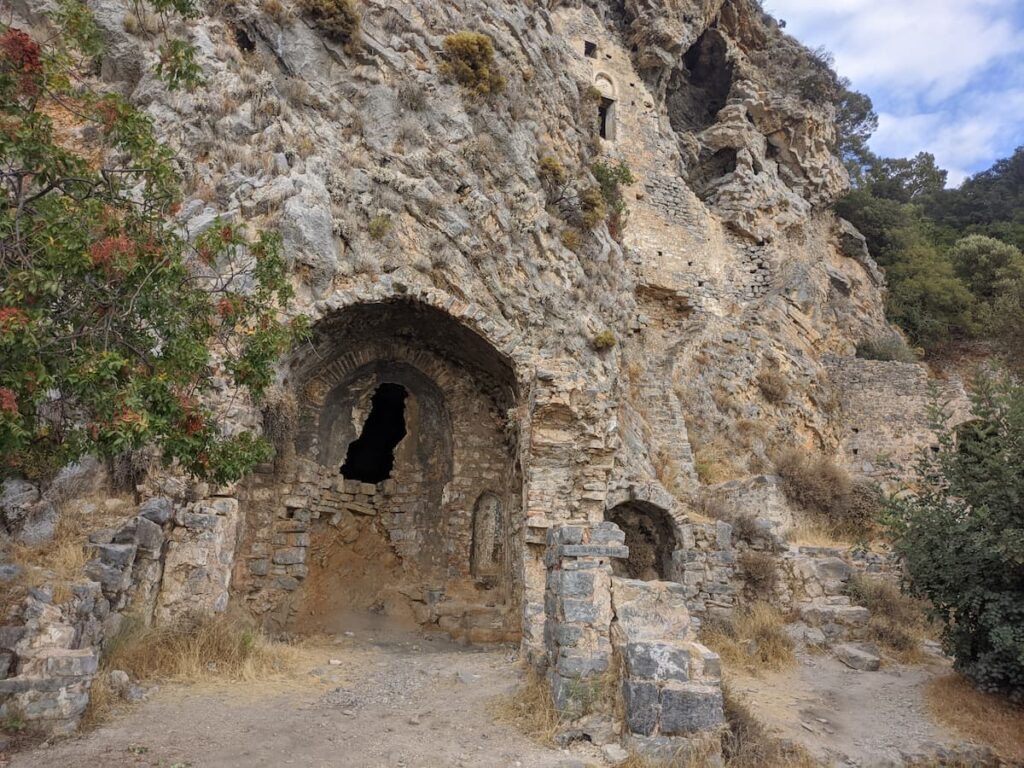
A Small Cave and Water Cistern Near the Ruins
Near the lower side of Afkule, there is also a small cave and water-storage feature that is easy to miss if you only stop at the main monastery viewpoint. From the base of the ruins, a rough path continues to the left towards a quieter rocky area where water can collect inside a cistern-like space. It is a small detail, but it makes the site feel even more tied to the cliff and the practical needs of someone living here in isolation.
This area should still be treated as an optional extra, not a standard visitor route. The path can be rough, exposed or unclear depending on conditions, so only continue if you are confident on uneven ground, have enough daylight and know you can return the same way. If the route feels slippery or uncertain, it is better to enjoy the monastery and sea view from the main area.
How to Combine Afkule with Nearby Places
Afkule combines well with Kayaköy. If you have not visited before, allow time for Kayaköy Ghost Town either before or after the walk. Kayaköy gives historical context to the wider area, while Afkule shows a quieter and more isolated side of the same landscape.
If you continue towards the coast, Gemiler is another good addition. The area around Gemiler Beach and St. Nicholas Island, also known as Gemiler Island, has its own Byzantine ruins, sea views and island atmosphere. Afkule and St. Nicholas Island are very different visits, but they sit within the same wider story of coastline, ruins and early Christian heritage.
For a fuller day, you could start with Kayaköy in the morning, walk to Afkule before the heat becomes strong, then continue later towards Gemiler or back towards Ölüdeniz. If your main aim is swimming and beach time, combine Afkule with the coast. If your main interest is history, combine it with Kayaköy and Fethiye’s old town area.
Local tip: Do not treat Afkule as a quick roadside stop. Give yourself enough time to walk slowly, enjoy the forest section, check your route near the final descent, and return before the light fades.
Practical Tips Before You Go
- Wear proper shoes: The final descent is rough, dusty and uneven, and rocks can become slippery after rain.
- Bring water: There are no facilities at the monastery, and the return climb can feel harder in warm weather.
- Save your route offline: Mobile signal may be weak, and the final section can be confusing.
- Watch the descent: Afkule is reached by going down towards the cliffside, not by continuing endlessly uphill.
- Plan around heat and daylight: In summer, avoid the hottest hours and leave enough time to return before dark.
- Park carefully: Low cars may need to stop earlier on the rough forest track, and parked vehicles should not block local access.
- Respect the ruins: Do not carve names, move stones, light fires or leave litter.
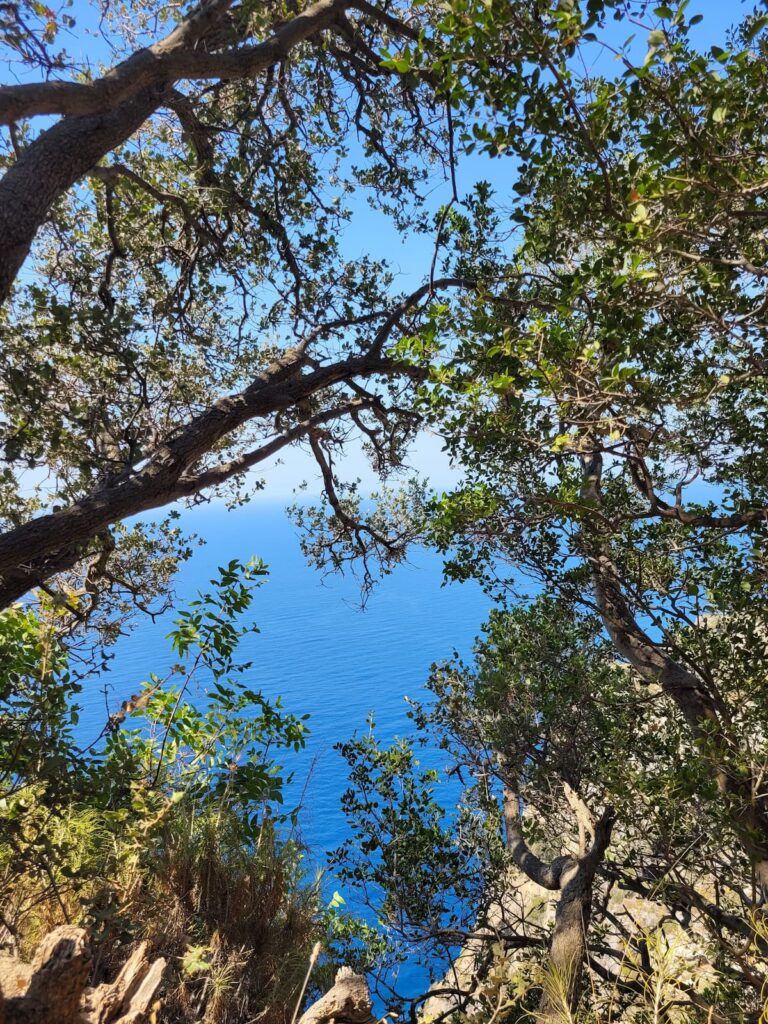
Local Perspective
Afkule is best approached as a quiet countryside walk with a small historic site at the end, not as a managed tourist attraction. There is no visitor centre, no staffed entrance and no smooth final path. That is part of the experience, but it also means you need to arrive prepared.
If you enjoy old stone ruins, coastal views and places that still feel a little hidden, Afkule can be a memorable stop. It also shows a different side of the Kayaköy, Gemiler and Ölüdeniz area: not only beaches and boat trips, but forest tracks, remote ruins and traces of local history.
What I like about Afkule is how quiet it can feel. On a calm day, there is no beach music, no traffic noise and no crowds moving from one viewpoint to another. Just pine forest, sea air, stone, wind and the view down towards the coast.
The ruins deserve to be treated with care. Please take all rubbish back with you, avoid writing on the walls, and leave the site as you would hope to find it. Afkule is unstaffed and fragile, so small choices by each visitor make a real difference here.
Frequently Asked Questions About Afkule Monastery
Is Afkule Monastery free to visit?
Yes. Afkule Monastery is free to visit, and there is no formal ticket booth at the ruins. The site is unstaffed, so visitors should arrive prepared and take care around the final cliffside section.
Are there any facilities like toilets or shops at Afkule?
No. There are no shops, cafés or toilet facilities at the ruins, and there are no facilities along the forest trail either. Bring your own water and anything else you need before leaving Kayaköy or Fethiye.
How difficult is the walk to Afkule?
The walk is moderate overall, but the final descent towards the ruins is steep, rough and exposed. It is not a long hike if you start near the end of the rough forest track, but it is not a simple flat path either.
Can you drive all the way to Afkule Monastery?
No. You can drive part of the way along the rough forest track, depending on road conditions and your vehicle, but the final approach is on foot. Low cars may need to park earlier and continue by walking.
Is Afkule suitable for children?
Afkule is not ideal for very young children because of the uneven ground and exposed edges near the final section. Older children who are used to walking may manage it, but adults should supervise closely.
What is the best time to visit Afkule?
Morning and late afternoon are usually the best times to visit. Sunset can be beautiful, but only if you leave enough daylight to return safely before the forest path becomes difficult to follow.
Do you need proper hiking shoes for Afkule?
You do not need heavy hiking boots, but shoes with good grip are strongly recommended. The final descent can be dusty, uneven and slippery, especially after rain or in dry summer conditions.
About this guide: This guide was prepared by the local Fethiye Tours team to help visitors decide whether Afkule Monastery is the right kind of stop for their trip.
