
Saklıkent is a narrow limestone gorge with a cold mountain river running through it. It sits about 45 km from Fethiye, near Seydikemer, and is protected as Saklıkent National Park (Saklıkent Millî Parkı). For anyone looking inland rather than out to sea, it is one of the most popular day trips from Fethiye. The name means “hidden city” in Turkish, a reference to the gorge’s secluded setting. The canyon was carved by the Karaçay, a mountain stream that flows into the Eşen River and on to the Mediterranean near Patara. The limestone here is easily eroded, and over time the water worked its way along fault lines in the rock, cutting down to create walls that rise to around 300 metres, with the gap between them narrowing in places to just 2–4 metres.
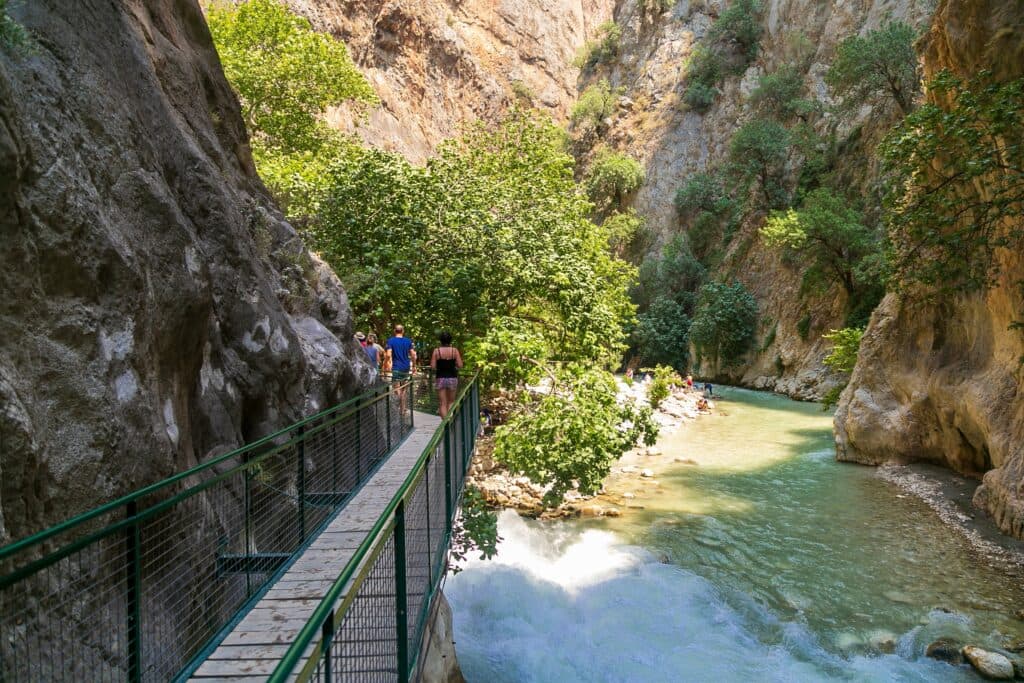
The gorge stretches nearly 18 km, but most visitors explore only the opening section: a wooden boardwalk running along the cliff face, followed by a section where the path continues through the river itself when conditions allow.
According to local accounts, the canyon entrance was discovered in the 1980s by a shepherd searching for a stray goat. Saklıkent opened to visitors in 1988, and once the boardwalk was built, it became a fixture on organised tours of the region.
Is Saklıkent Gorge Right for You?
- If you are visiting with young children: The current can be stronger than it looks, so keep little ones within reach and turn back as soon as they start to struggle.
- If you would rather stay dry: You do not need to enter the water at all. See visiting without getting wet for what this involves.
- If you want to swim: This is wading rather than swimming. In the shallower sections the water is often knee-deep.

Entrance Fee & Payment
The ticket covers entry to Saklıkent National Park. The 2026 rate is 250 TL for adults and 125 TL for students. The reduced rate requires a valid student ID, and student cards issued outside Turkey are accepted.
You can pay at the ticket office in cash or by card. For extras such as shoe hire, lockers and snacks, cash is the simplest option. There is no ATM at the gorge, so withdraw enough cash in Fethiye or Seydikemer before you head out.
How to Get to Saklıkent Gorge from Fethiye
From Fethiye, the drive takes 45–60 minutes, heading inland away from the coast and into the mountains towards Seydikemer. There is paid parking at the entrance.
If you are staying in Ölüdeniz, the gorge is about 52 km away, and from Kaş it is about 85 km. Dalaman Airport is roughly 90 km from Saklıkent. Without a hire car, the simplest route from the airport is the Muttaş shuttle bus to Fethiye, followed by a local minibus to the gorge.
In Fethiye, shared local minibuses known as dolmuş leave for Saklıkent from outside Fethiye Otogar, the main bus station, and from stops near Yeni Hamidiye Mosque in the town centre. In high season, services run roughly every 30 minutes.
The last dolmuş back to Fethiye usually leaves around 19:30, which is close to the gorge’s own closing time, so do not plan on staying until the very end of the day. Aim for a mid-afternoon or early-evening service, and check the return times with the driver when you arrive.
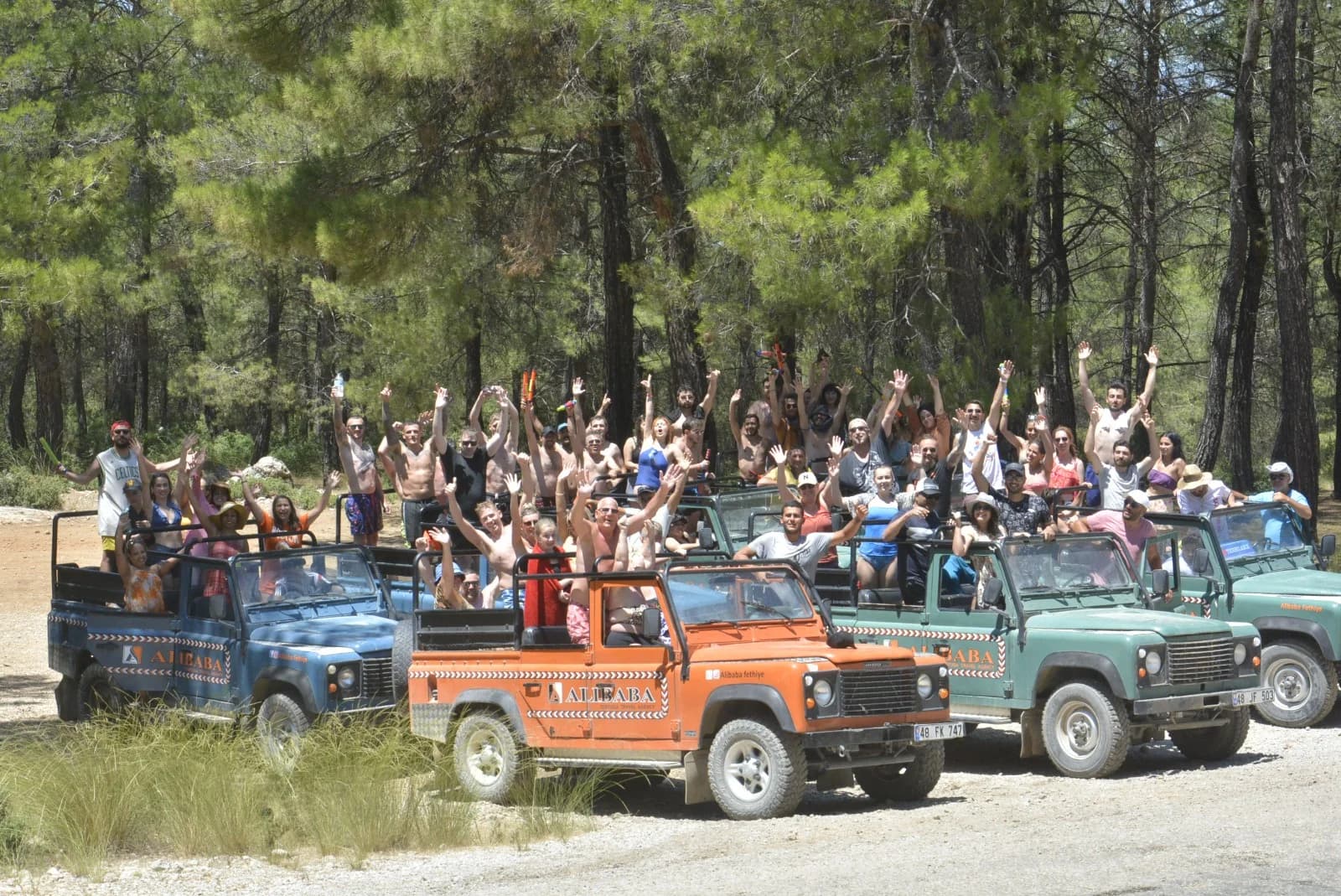
Saklıkent Gorge is often paired with Gizlikent Waterfall and mud baths on organised jeep safari tours from Fethiye. This is the simplest way to visit all three without arranging transport yourself.
Local tip: Gizlikent Waterfall is only about 5 minutes away by car and is easy to add to the same trip. The approach is shorter than the river walk here, and it ends at a small cascade inside a steep-sided gorge.
See our Fethiye Jeep Safari including Saklıkent →How Long Should You Allow?
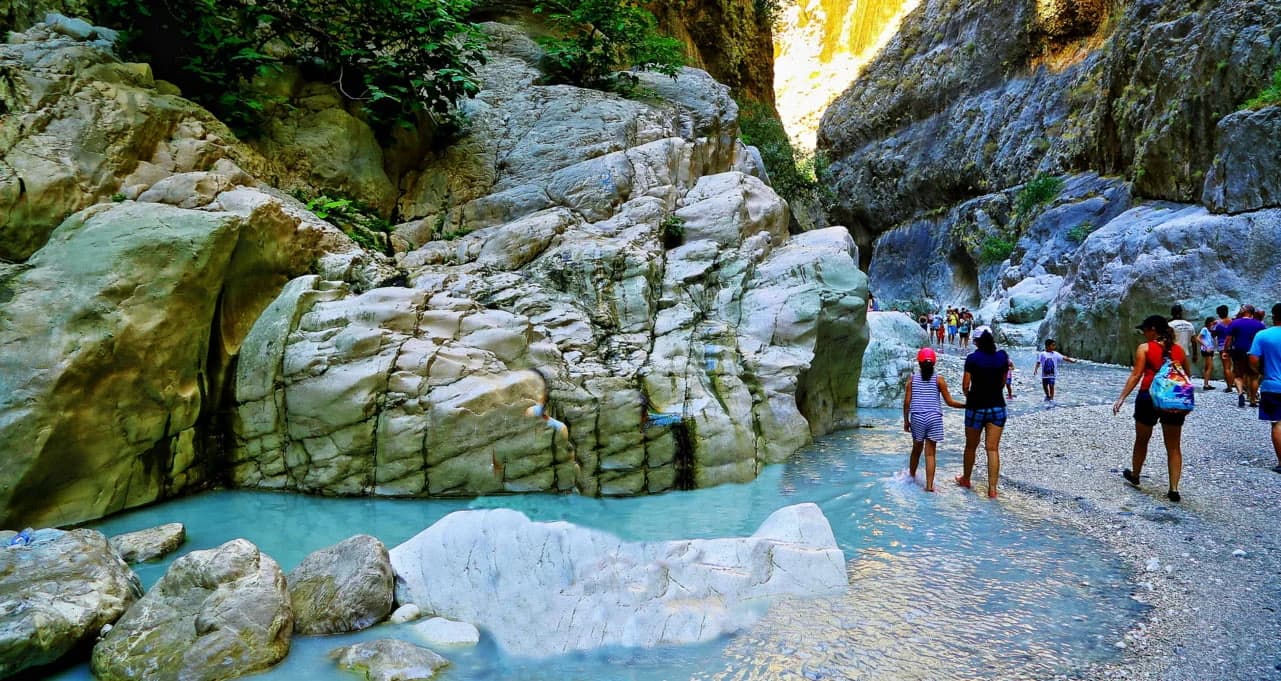
A relaxed visit takes around 2–3 hours in total. Most people spend 30–45 minutes in the river beyond the boardwalk, wading a few hundred metres before turning round. Following the river as far as it can be walked takes closer to an hour and a half there and back, so allow 3–4 hours if you plan to go that far.
Visitors usually change into water shoes at the entrance, then rest by the river once they come back out. Tour groups begin arriving from late morning, so an early start leaves the boardwalk and the first stretch of river much quieter. In summer, queues can also build up at the ticket office at weekends and during Turkish public holidays, particularly the two Bayram festivals, so arrive as early as you can on those days.
How Far Can You Go?
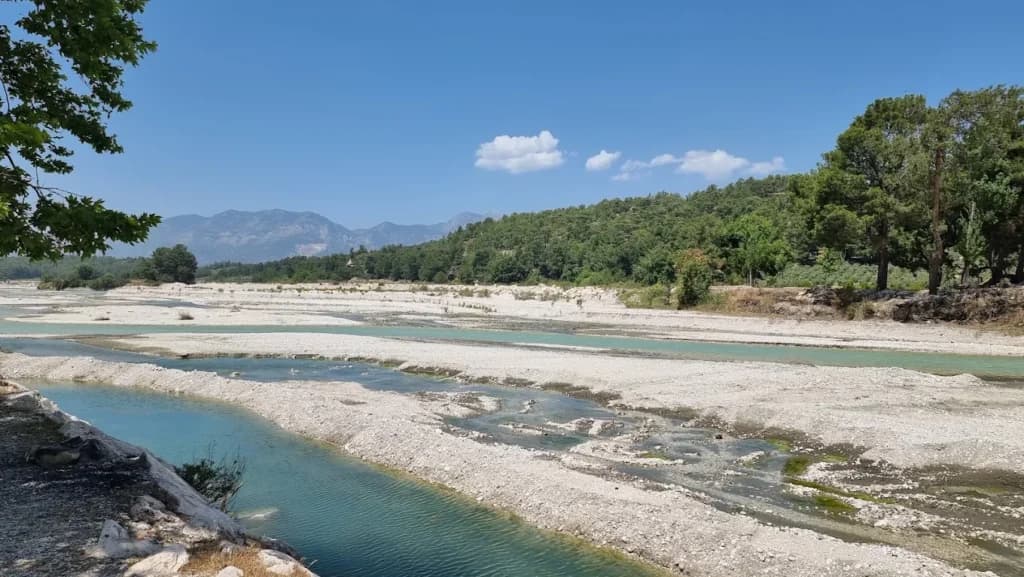
Past the boardwalk, the gorge opens out into a wide, rocky stretch, with the water running over a gravelly bed. The way is usually blocked around 700–800 metres in, by a large boulder or a small waterfall that cannot be passed without climbing equipment. Beyond this point, the canyon walls close in and the sky narrows to a thin strip above.
Going any further is only possible with a professional guide, canyoning equipment (wetsuit, helmet, harness and ropes) and a good level of fitness. The route from that point on involves swimming through deep pools, climbing steep rock faces and squeezing through narrow passages. Guided canyoning trips cover a section of this upper gorge rather than the full 18 km, and they take most of a day.
Visiting Without Getting Wet
Plenty of visitors come to Saklıkent with no intention of walking through a cold mountain river, and that is a perfectly good way to see the gorge. The wooden boardwalk runs along the canyon wall with the water below, and it takes you to the point where the gorge narrows and the springs feed in. This stretch is where most of the photographs of Saklıkent are taken.
The boardwalk ends at the river. To continue into the gorge, you have to wade across, and this is where the water is at its coldest and fastest. Unlike the shallower stretches further in, where you can pick your way forward at your own pace, this crossing has to be made in one go. If you would rather stay dry, the end of the boardwalk is where you stop.
Allow around an hour for a dry visit: the walk out along the boardwalk, time at the canyon mouth for photographs and a pause in the shade on the way back. That is less than half as long as a visit that includes the river walk, which makes it easy to combine with Tlos or another stop in the same valley.
The entrance fee is the same whether or not you enter the river, as the ticket covers the national park rather than any particular route. Ordinary trainers are fine for the boardwalk, so there is no need to hire water shoes if you are staying dry.
This option suits anyone who is unsure on their feet, travelling with very young children, visiting between other stops on a jeep safari, or simply unwilling to spend the afternoon in water at 5°C to 8°C. You still see the canyon walls at their most dramatic; what you miss is the stretch of open riverbed beyond them.
What to Wear and Bring
- Footwear: Thick-soled water shoes are the best option if you plan to walk in the river. The riverbed is uneven, with sharp stones in places, and flip-flops will not give you enough grip underfoot. If you do not have your own, basic rubber water shoes are available to hire on site.
- Clothing: If you are going into the river, wear quick-drying shorts or swimwear, since you will almost certainly get wet. The water can feel surprisingly cold, even on a hot day. If you are visiting on a jeep safari that includes the mud baths, wear an old T-shirt or dark swimwear. The clay usually rinses off your skin easily, but it can stain light-coloured fabrics.
- Waterproof pouch: Pack one for your phone, cash and small valuables, especially once you move beyond the boardwalk.
There are changing rooms and lockers in the entrance area, near the ticket office. The lockers are useful if you want to leave a bag behind before heading into the river. There are no toilets inside the gorge itself, so use the paid toilets at the entrance before you set off.
River Tubing (“Ringo”)
Near the ticket office, local operators also offer short tubing rides, often advertised as “ringo”. You sit in a large rubber ring and drift downstream through the shallower parts of the river. The rides last about 20 minutes and are not included in the gorge entrance ticket. Children must be at least five years old to take part.
Safety & Seasonal Conditions
The uneven riverbed and steady current can catch first-time visitors off guard. Some rocks are smooth and slippery, so move slowly, use the safety ropes where available, and head back if you start to feel unsteady. Helmets can be hired at the entrance and are worth wearing in the narrower sections, where small stones occasionally fall from the canyon walls, sometimes dislodged by goats grazing on the slopes above.
The river is fed by natural springs deep within the limestone, which is why it stays at 5°C to 8°C whatever the season. Even in high summer the water takes your breath away at first, so wade in gradually rather than dropping straight into the deeper sections beyond the boardwalk.
In spring and late autumn, especially April–May and October–November, access beyond the boardwalk may be restricted after heavy rain or when water levels are high, and sections are sometimes closed for safety.
If you are visiting outside the main summer season, ask at the ticket office which sections are currently open before buying your ticket.
Breakfast & Lunch by the River
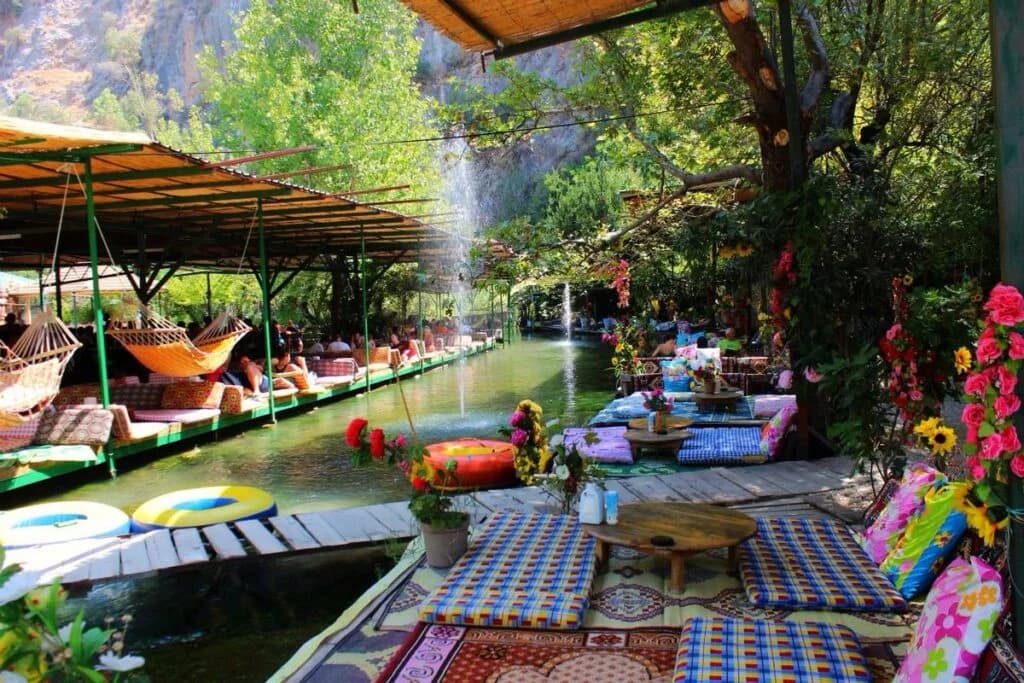
Many visitors stop at the restaurants by the entrance, either for breakfast before heading into the gorge or for lunch afterwards. Several are set on wooden platforms over the water, so you can sit in the shade with the river running below, and some have swings and hammocks just above the water.
If you arrive early, a Turkish breakfast on the platforms is a relaxed way to start the day before the tour groups come in. At weekends the riverside tables fill up quickly, so it is worth booking ahead.
Fresh trout is the local speciality, usually grilled and served with salad and bread. Menus are short, with a handful of other regional dishes alongside it. It is worth checking prices before you order, especially in peak season.
The restaurants accept card payments, but keep some cash for the stalls beside the river, which serve gözleme, a savoury Turkish flatbread, throughout the day. Some of these stalls also stock mountain honey, olive oil soap and dried herbs to take home.
Nearby: Combine Saklıkent with Tlos
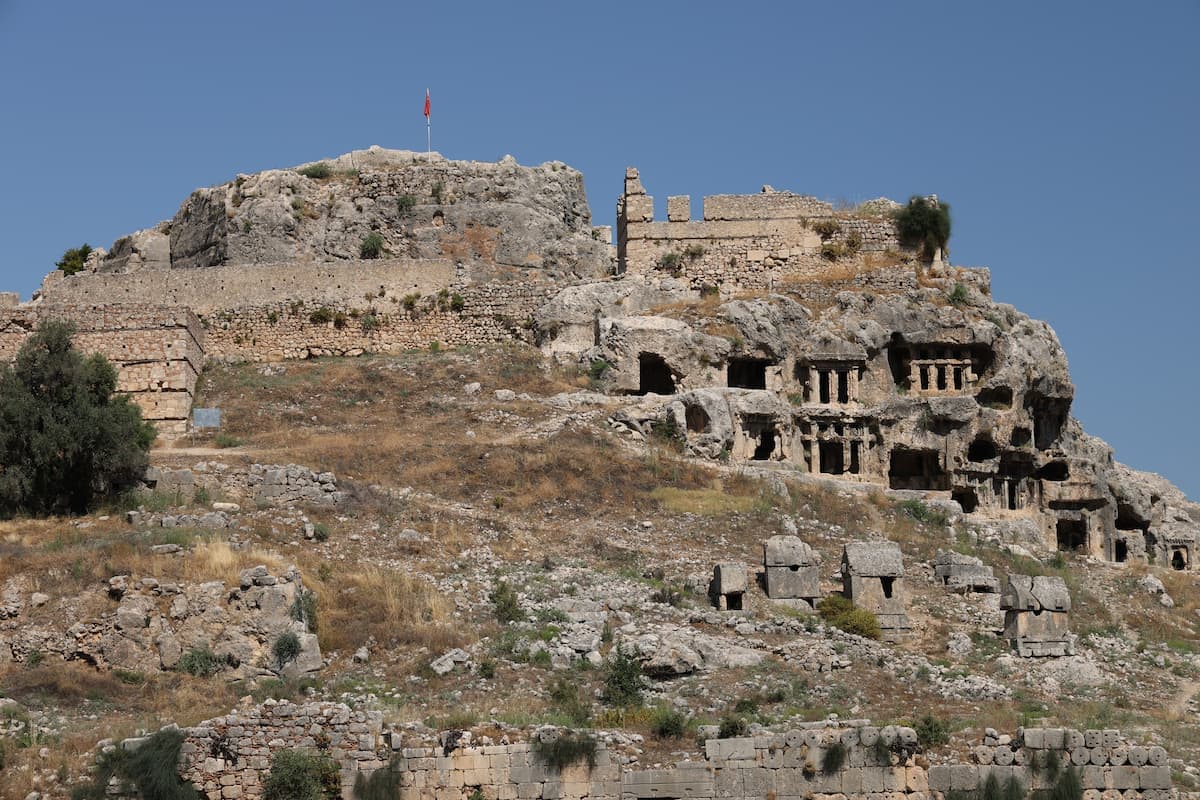
If you have your own transport, the ancient Lycian city of Tlos is about 20 minutes from Saklıkent by car. The site sits on a rocky outcrop above the valley and includes an acropolis, rock-cut tombs and a Roman theatre. One of the six principal cities of the Lycian League, Tlos was settled well before 2000 BCE, and it was added to the UNESCO World Heritage Tentative List in 2019. It is also linked to the myth of Bellerophon, the hero said to have tamed Pegasus. Leave Fethiye early and you can visit both in a single day.
No car? This full-day guided tour visits Tlos in the morning, stops for lunch at Gizlikent Waterfall and spends the afternoon at Saklıkent Gorge. Hotel pick-up and return are by minibus or midibus, so there is no need to drive the mountain roads yourself.
Good to know: This is a calmer day than the jeep safari, with no water fights or mud baths, and lunch at Gizlikent is included. Entrance fees for Tlos and Saklıkent are paid separately at the gate.
See our Tlos, Saklıkent and Gizlikent Tour →Frequently Asked Questions
Is Saklıkent Gorge worth visiting?+
How much is the entrance fee for Saklıkent Gorge?+
What are the opening hours for Saklıkent Gorge?+
Can Saklıkent Gorge close due to weather or high water?+
Is Saklıkent suitable for children or older visitors?+
Can you swim in Saklıkent Gorge?+
What is the minimum age for river tubing near Saklıkent?+
Updated in October 2026 by the Fethiye Tours team after checking entry prices, opening hours and current conditions at the gorge.
Need help planning your visit? Message Fethiye Tours on WhatsApp