
📅 Last updated: 2 October 2026 • 🛡️ Checked locally before publication: entry fee, boat access and site conditions.
St Nicholas Island, also known as Gemiler Island, sits just off the coast near Ölüdeniz, with Byzantine remains, calm swimming coves and long views along the Fethiye coastline. A narrow limestone ridge rising steeply out of the water, it holds five churches from the Byzantine period on its slopes, one of which gave the island the name it still goes by. Most visitors arrive on a boat trip and, once ashore, swim nearby, wander through the lower ruins or walk up to the higher church remains.
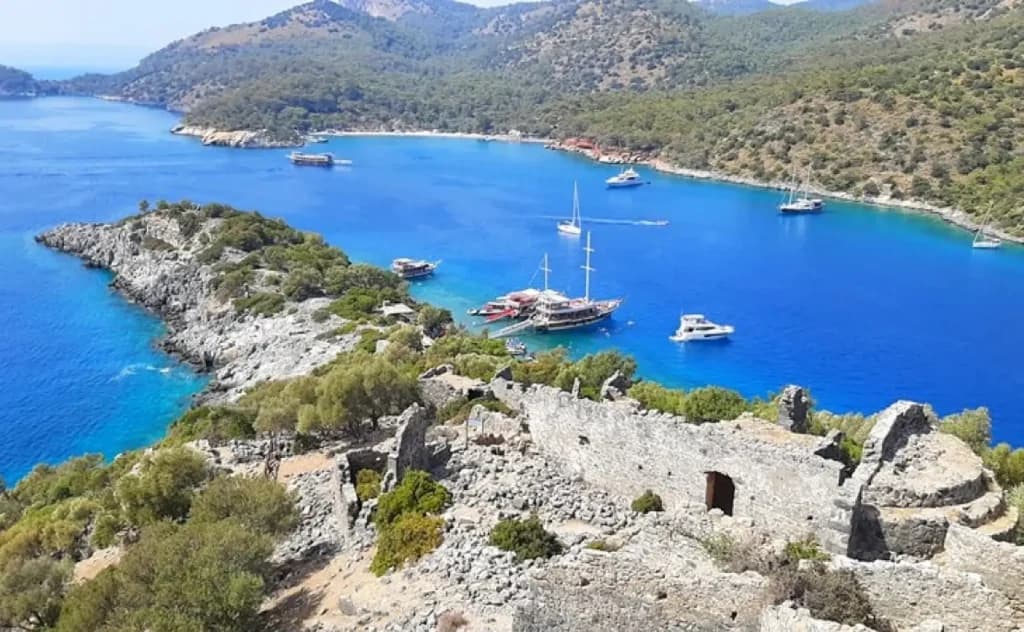
Season: May–October • Typical boat tour stop: 45–60 minutes • Entrance fee: €3, paid in Turkish lira in cash and not included in boat tour prices • Best for: Byzantine ruins, snorkelling and coastal views
What Makes St Nicholas Island Different
The island is notable for how much Byzantine stonework survives on one small limestone ridge. Archaeological surveys, including work by Osaka University, have documented its five churches and identified further religious structures across the ridge and the neighbouring islets.
This was an important coastal settlement in the Byzantine period. The calm water around the island made it a natural stop for ships working this stretch of the eastern Mediterranean, and the churches, terraces and connecting paths show a site that was organised rather than makeshift.
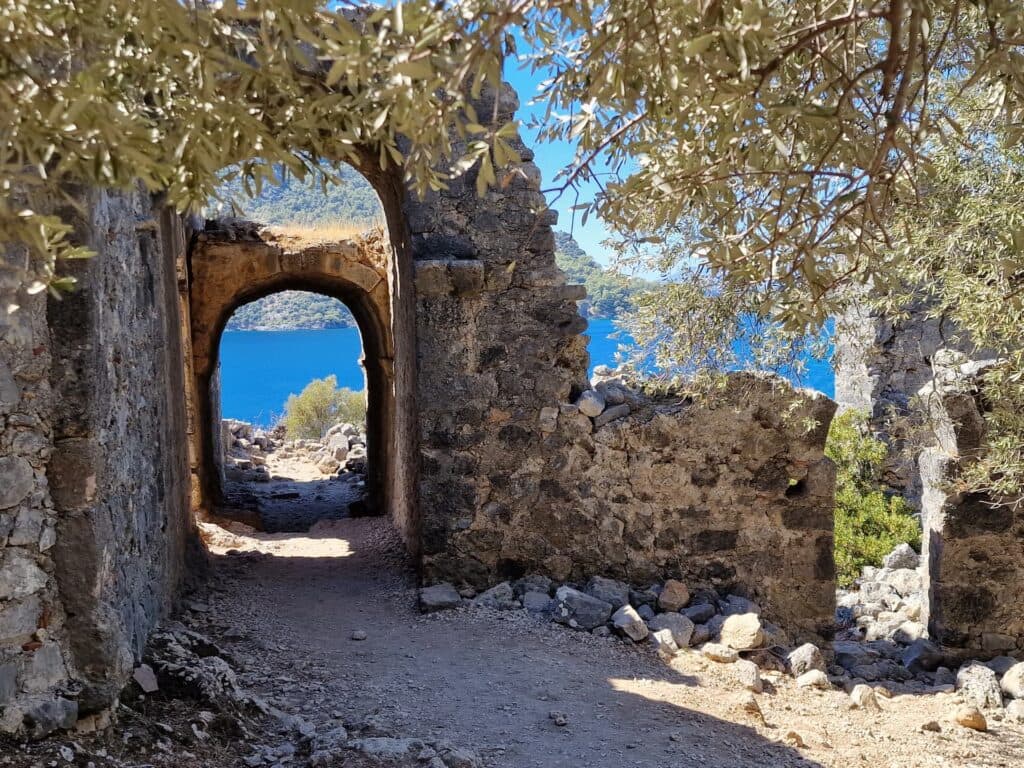
The site is open and weathered rather than restored. Walls, terraces, cisterns and rock-cut chambers are spread across the slope, with the sea in view from almost anywhere on it. There are not many places on this coast where you can swim off a boat and walk into a Byzantine church ten minutes later.
Beyond the church ruins, Gemiler is quieter and rougher underfoot than most stops on the route. Walk away from the terraces and stone walls and you will find hardy coastal plants, wild olives and carob trees, and the occasional goat. Very little here has been tidied up for visitors, which is a large part of the appeal.
Getting to St Nicholas Island
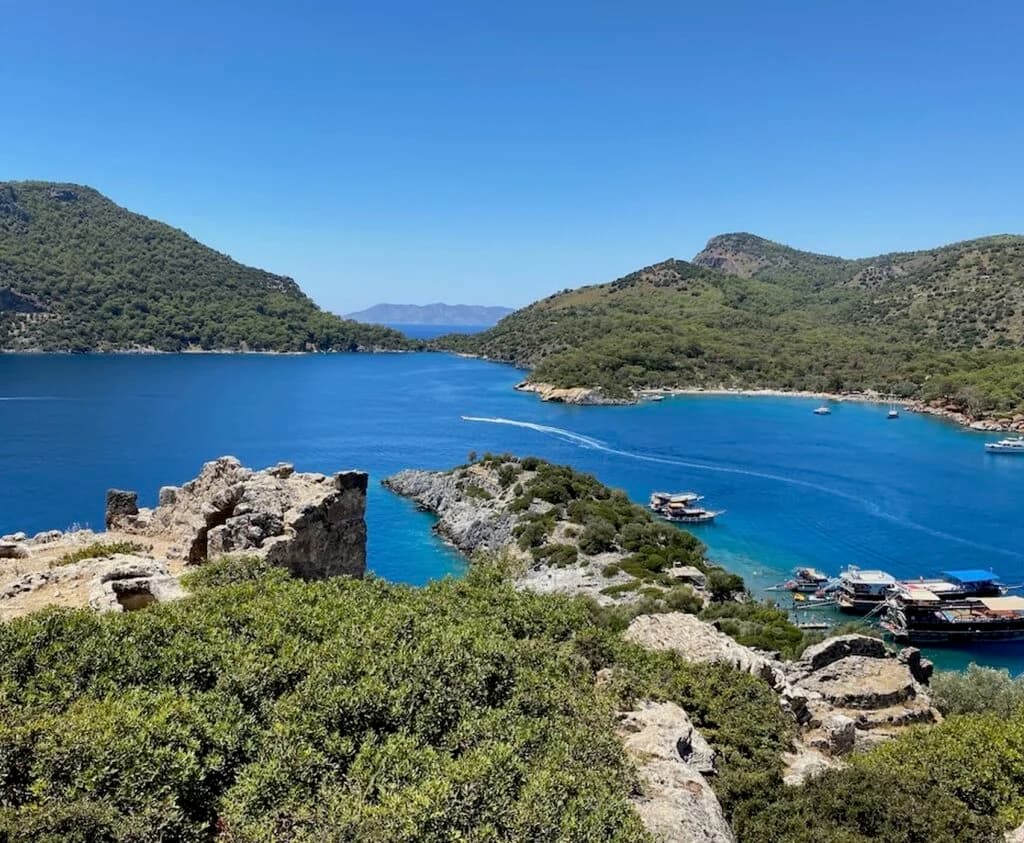
St Nicholas Island has no road access, so you can only arrive from the water. Most travellers come as part of an Ölüdeniz boat trip, with transfers available from Fethiye hotels to Belcekız Beach in Ölüdeniz. The boat journey from Ölüdeniz takes around 30 minutes, depending on sea conditions and the day's route.
For a more independent visit, you can also reach the island from Gemiler Beach on the mainland. There is no scheduled service, so it comes down to asking around at the beach and agreeing a price with one of the boat owners. Whether anyone is willing to take you across depends on the weather and on who is working that day. In summer, kayaks and canoes are also available for hire, and the paddle across takes around 10–20 minutes in calm water. That is the more adventurous option, and only worth attempting on a settled day.
Gemiler Beach itself can be reached on foot. For Lycian Way hikers, the route from Kayaköy is about 5 kilometres and takes around 90 minutes, descending through olive groves and pine forest to the shore. You still need to find a boat across once you arrive, so the island makes a good bonus at the end of the walk rather than something to count on.
| Visit Option | What to Expect | Best For |
|---|---|---|
| Daily boat tour | An island stop as part of a wider Ölüdeniz boat itinerary. | A first visit, with time for either a swim or the lower ruins. |
| Private charter | More flexible timing, with the option to stay longer or arrive later. | Photography and a quieter time ashore. |
| Kayak or canoe | A 10–20-minute paddle from Gemiler Beach, in calm water only. | A more active crossing, for confident swimmers. |
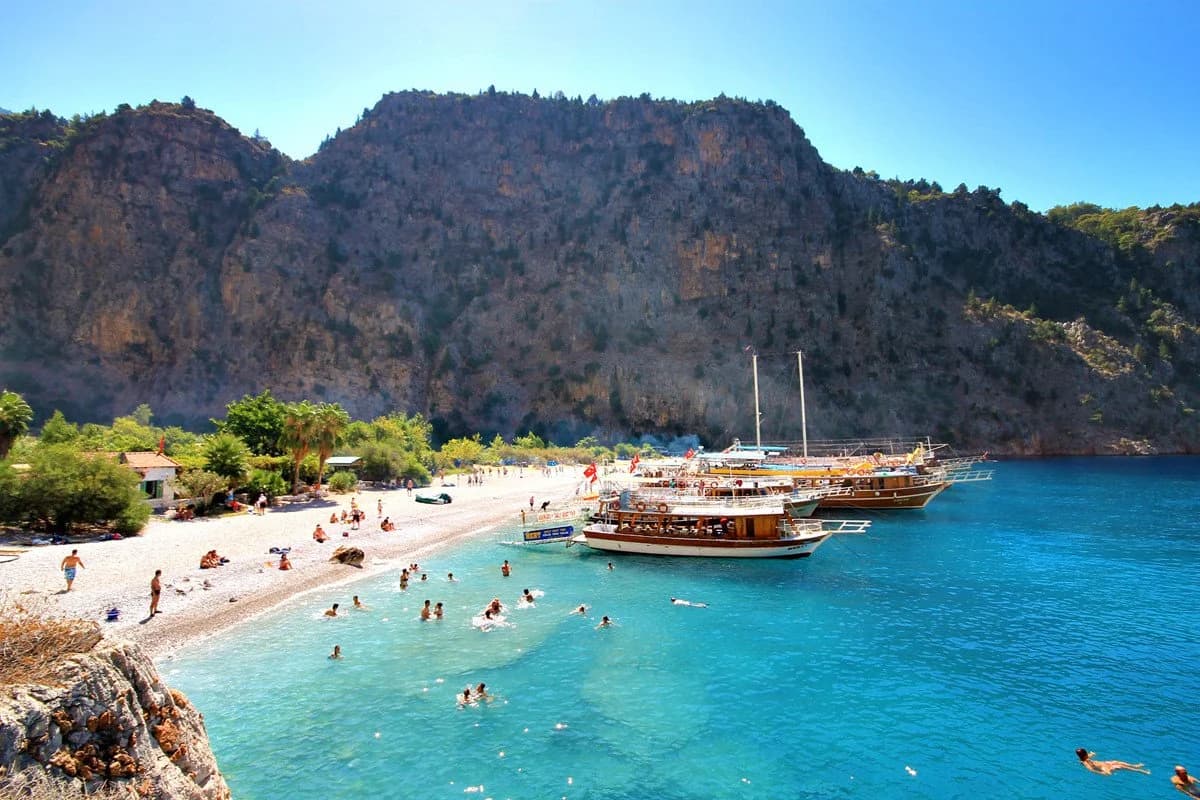
St Nicholas Island is one of the main stops on the full-day Ölüdeniz boat trip, alongside Butterfly Valley, the Blue Cave and smaller swimming bays along the coast.
Key Ruins & What to Look For
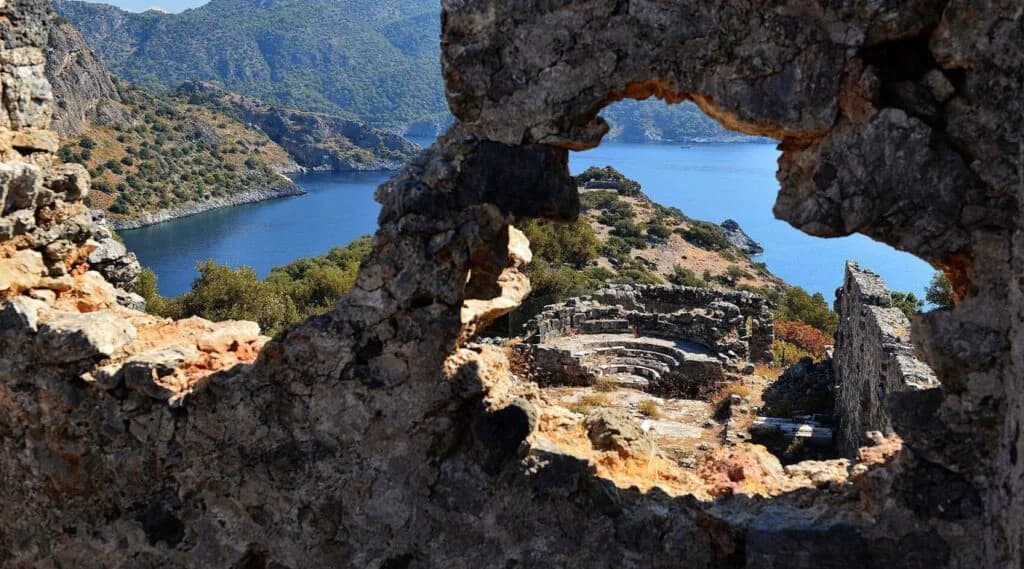
1. The 350-Metre Covered Processional Corridor
This is the island's most recognisable structure. Originally roofed along its length, it linked the churches on the hillside, and enough of it survives to walk along and see how pilgrims once moved between them.
2. The Sunken Harbour & Snorkelling
Along the island's northern and north-western shoreline, sections of the ancient waterfront now lie below the waterline. This is the most rewarding area for snorkelling. Stone blocks from the harbour and, in places, decorative stonework such as ancient column capitals are visible when the water is clear.
Visibility is generally best early in the day, before the boats arrive and stir up the sediment.
The water here is usually calm enough for an easy swim, though the main boat landing gets busy when several boats come in together.
3. The Upper Church, Mosaics & Summit Lighthouse
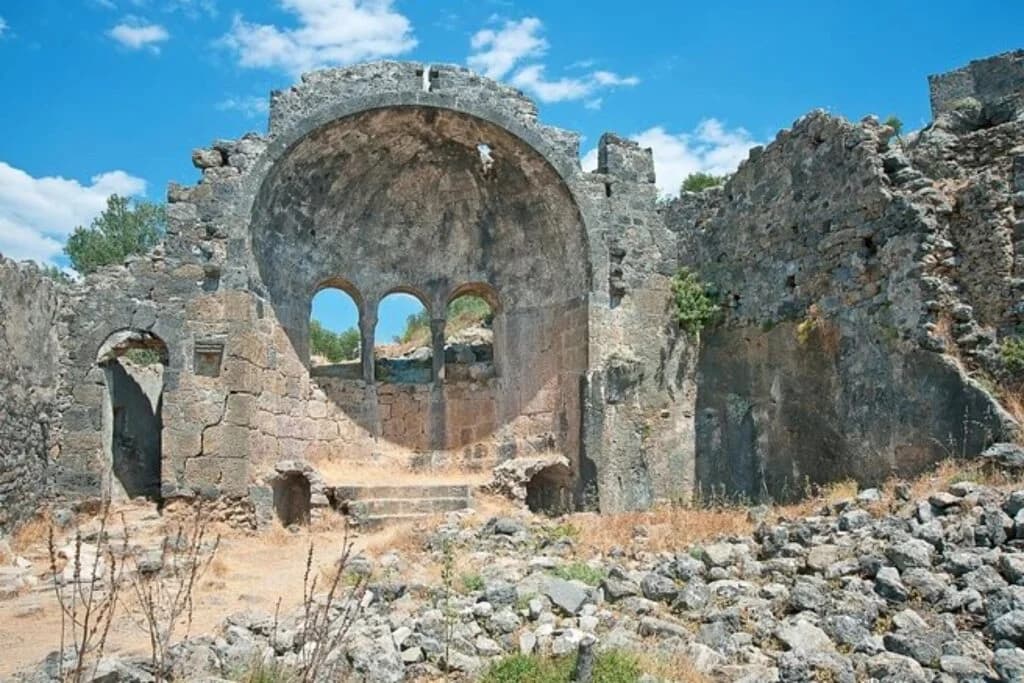
Higher on the island, the remains of the largest church offer some of the widest views over the surrounding coast. Look carefully at the surviving floor sections and you may still notice fragments of geometric mosaics, a reminder that these churches were once finely decorated.
Continue to the summit and you will find a small lighthouse. In the late afternoon, the outlook from here takes in the sea, the nearby headlands and the mountains behind Ölüdeniz.
The direct path up from the shore is steep in places. Most reasonably fit visitors manage it without difficulty.
4. The Ship Carving in the Church Apse
In the apse of the largest church, look for two small details linked to the island's seafaring and pilgrimage past: a cross-shaped recess and a ship carving. Archaeological studies suggest the recess may have served as a reliquary niche for sacred objects.
The carving is harder to explain, and its exact meaning is still debated. Guides on local boat trips tie it to the story of Saint Nicholas' relics, which is told further down this page. What it certainly is, though, is a mark left by someone who was here, and the most personal trace the island holds of the sailors and pilgrims who once came ashore.
5. The Great Cisterns & Daily Life on the Island
The hillside also holds a network of large rock-cut cisterns. The island has no natural fresh water, so every drop had to be collected and stored, both for the religious community and for the crews anchored below. Alongside the terraces, carved recesses and building remains, they show a settlement built to support residents, visiting pilgrims and passing ships.
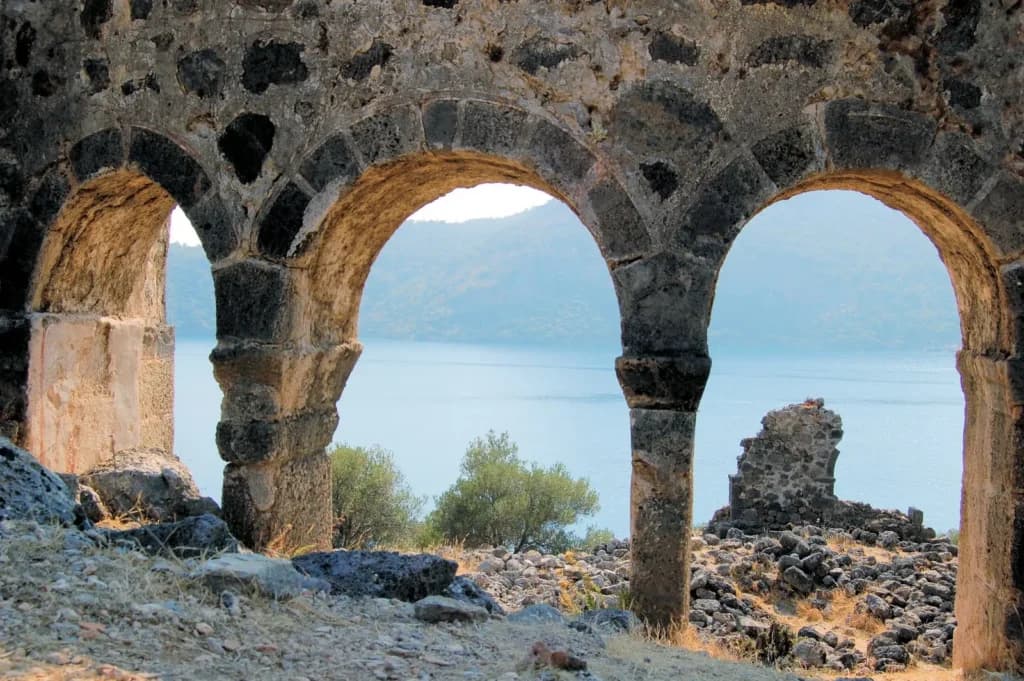
Why Is It Called St Nicholas Island?
The island has been known as Aya Nikola for centuries, and Italian medieval sea charts marked it as St Nicholas Island. The name itself is well documented. Which Nicholas it refers to is far less certain.
Two pieces of evidence tie the site to the name. A medieval maritime guide records that the church at the island's highest point was dedicated to Saint Nicholas, and an inscription reading Hosios Nikolaos was found in the apse fresco of one of the churches. Nothing further has come to light.
The obvious candidate is Saint Nicholas of Myra, the fourth-century bishop of modern-day Demre who became the patron saint of sailors and, much later, the basis for Father Christmas. Myra lies more than 90 kilometres along the coast and remains the place most closely tied to him. Other researchers point instead to Saint Nicholas of Sion, a later figure from Alacahisar near Demre, as the more likely dedicatee. Neither case is settled, and you will see both repeated locally as fact.
What is clear is why a church here would carry the name of Saint Nicholas at all. Gemiler sat on the sea route between Constantinople and the Holy Land, and pilgrims heading east called here to take on water and wait out bad weather. A church dedicated to the protector of sailors was a natural fit for a maritime stop like this. The island appears to have been the seat of a bishopric from the fifth century onwards, and was abandoned as Arab raids reached this coast in the seventh century.
The story of Nicholas of Myra did not end at Demre. In 1087, merchants from Bari removed his relics from the church there and carried them back to their city, where they remain today. Boat guides along this coast still link that voyage to Gemiler, and to the ship carving in the church above the anchorage. It is a retelling rather than a documented connection, but it has stuck, and it fits a place that lived off the sea.
Best Time to Visit
Arrival times on shared boat tours are fixed, so the windows below matter only if you are on a private charter, or arranging your own boat or kayak from Gemiler Beach.
- 08:30–11:00: Best for exploring the ruins, before the heat builds and the crowds arrive.
- 11:30–15:00: Warmest water and the busiest few hours ashore. Good for swimming, hard going on the climb.
- Late afternoon or sunset: Softer light and far fewer people. Shared tours have usually gone by then.
How Long to Explore the Island
If you want to reach the upper church remains and the summit lighthouse, work out your route before you land. The coves are a short walk from where the boats put you ashore, but the summit means a proper climb.
The walk up takes around 15–20 minutes, and a little less coming down, depending on your pace and the heat. With only 45 to 60 minutes ashore on a standard tour, that accounts for much of your time, and most of it if your stop is at the shorter end. It helps to decide in advance whether you have come for the ruins or for the water, as fitting in both means keeping up a fair pace.
💡 Local Tip: The path that loops round the hillside is gentler than the direct route up from the landing area. It adds a few minutes, but the walking is easier and the coastal views along it are better.
Practical Tips & Safety
- 👟 Footwear: Sturdy footwear is essential, as the paths are rocky and uneven.
- 🌊 Water shoes: Worth bringing for the harbour area, where submerged stones make the shoreline awkward to walk on.
- 💧 Bring water: There are no shops or taps, so carry plenty with you.
- ☀️ No shade, no facilities: The climb is fully exposed to the sun and there are no toilets on the island, so use the ones on your boat before you go ashore. A hat and sun cream are worth having in high summer.
- 💶 Cash for the entrance fee: The €3 fee is not included in boat tour prices and card payments are not accepted, so bring cash with you.
- 🏛️ Leave the ruins as you find them: The island and the seabed around it form a protected archaeological site, so nothing may be taken away, including loose stones or pottery fragments from the harbour.
- 🗑️ Take your litter with you: There are no bins, so take everything back to the boat.
- 🚤 For swimming: The smaller coves along the shore are usually quieter than the main arrival area.
Frequently Asked Questions About St Nicholas Island
How do you get to St Nicholas Island?+
The island can only be reached from the water. Most visitors arrive as part of a boat trip from Ölüdeniz. Independent visitors can sometimes arrange a lift across from Gemiler Beach by asking the boat owners working there, though there is no scheduled service and it depends on the weather and on who is available that day.
Is there an entrance fee for St Nicholas Island?+
Yes. The archaeological site entrance fee is €3, paid in Turkish lira in cash. It is not included in boat tour prices, so bring cash with you. The ticket office is open every day from May to October, and outside those months there is no one on the island to sell tickets.
How long do boat tours stop at St Nicholas Island?+
Most standard boat tours allow around 45–60 minutes on the island. That is enough for either a walk through the lower ruins or a swim, but not comfortably both. A private charter, or a boat you arrange yourself from Gemiler Beach, gives you more time.
Can you swim at St Nicholas Island?+
Yes. The water around the island is calm enough for swimming through most of the season, and the sunken harbour along the northern shore is the most popular spot for snorkelling.
Can you visit St Nicholas Island at sunset?+
Shared boat tours leave the island well before sunset, so a sunset visit means booking a private charter or arranging a boat yourself from Gemiler Beach.
Is St Nicholas Island difficult to explore?+
The terrain is rocky and uneven, so sturdy footwear is needed. The lower ruins are manageable for most visitors, but the church remains higher up involve a steep walk of 15 to 20 minutes with no shade.
Visiting St Nicholas Island with Fethiye Tours
Getting to St Nicholas Island takes some planning, and how you go shapes what you get to see. Most people see it on an Ölüdeniz boat trip, which calls there as part of a full day along the coast. For up-to-date boat times, route details or practical advice before you go, our team can help.
Our Fethiye-based team keeps track of path conditions, boat times and seasonal changes to the schedule. For bookings, questions about timings or a quick check before you travel, chat with us on WhatsApp.