
Last Updated: 9 October 2026
Afkule Monastery is not a quick roadside stop, which is part of the appeal. Set in the hills near Kayaköy, this small cliffside ruin is reached by a rocky path through pine woodland and open scrub. The final section drops steeply towards the ruins, high above the water.
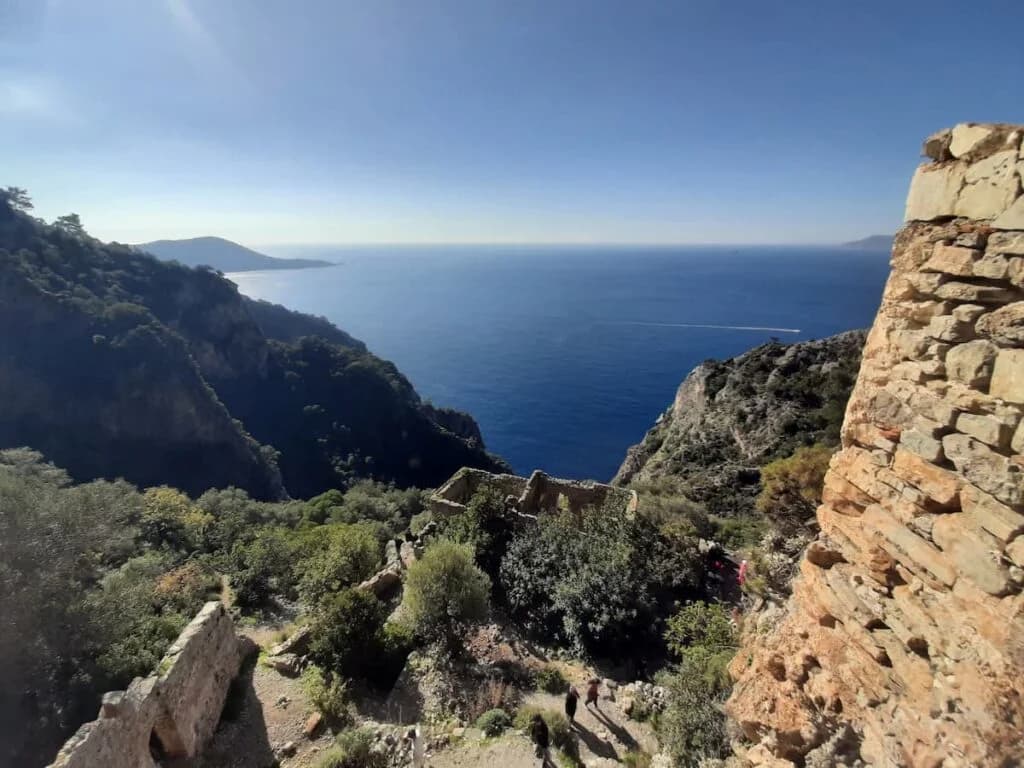
Expect a long stretch of quiet track, the smell of pine resin and warm earth, and very little else. Then Afkule comes into view, tucked into the cliff face: a compact structure braced against the rock, above a sheer drop to the sea.
Before You Go: Planning Notes
- Location: Coastal hills above Soğuksu Bay, near Kayaköy.
- Access: By car or dolmuş to Kayaköy, then along the Gemiler road to the Afkule turn-off and a forest track. The last stretch is always on foot.
- Entry & Facilities: Free and unstaffed. No ticket booth, toilets, cafés or shops.
- Time Needed: 1–1.5 hours return from the end of the drivable track; 3 hours from Kayaköy village.
- Difficulty: Moderate. The final descent is uneven and exposed in places.
- Best Time: Morning or late afternoon, back on the main track before dark.
- Not Suitable For: Pushchairs, wheelchairs, very young children or anyone uneasy near a drop.
- Bring: Shoes with a decent sole, water bought in Kayaköy and an offline map.
Table of Contents
Where Is Afkule Monastery?
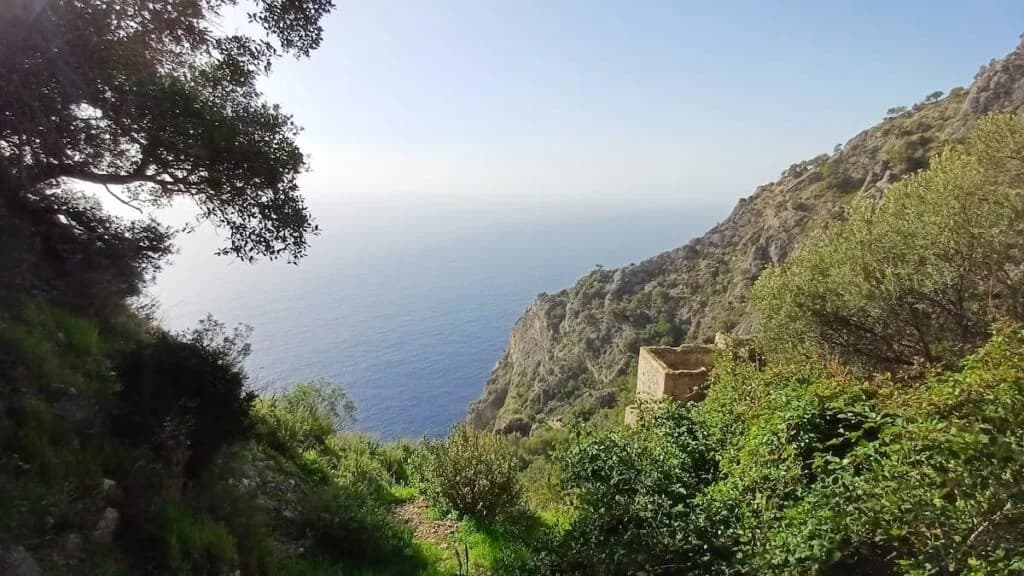
Afkule Monastery sits on the hilly stretch of coastline between Kayaköy and Gemiler, cut into the cliffs above Soğuksu Bay. It is sometimes mentioned alongside Gemiler Island, but Afkule itself is on the mainland.
The nearest settlement is Kayaköy Ghost Town, and the route leaves the village behind quickly. On a clear day, the view from the higher ground opens out across the water, with Rhodes sometimes visible on the horizon.
Although Afkule is not far from Fethiye, it feels much quieter and less developed than the better-known spots around Kayaköy and Gemiler. Nobody is on duty at the ruins, so treat the visit as a rural walk rather than a managed attraction.
What Is Afkule Monastery?
The site is also known as Af Kule or Çileler Manastırı. In Turkish, af means forgiveness or pardon, and kule means tower, so the name is often translated as the Tower of Forgiveness or Tower of Mercy. Çileler Manastırı, sometimes translated as the Monastery of Trials, shifts the emphasis to the hardship and solitude of monastic life in a place this exposed.
Afkule is associated with the early Byzantine period, most often the 5th or 6th century, though the site has never been firmly dated. Local tradition connects it with Saint Eleftherios, who is said to have carved the rooms out of the rock and lived here in seclusion as an act of penance. That account belongs to tradition rather than documented history.
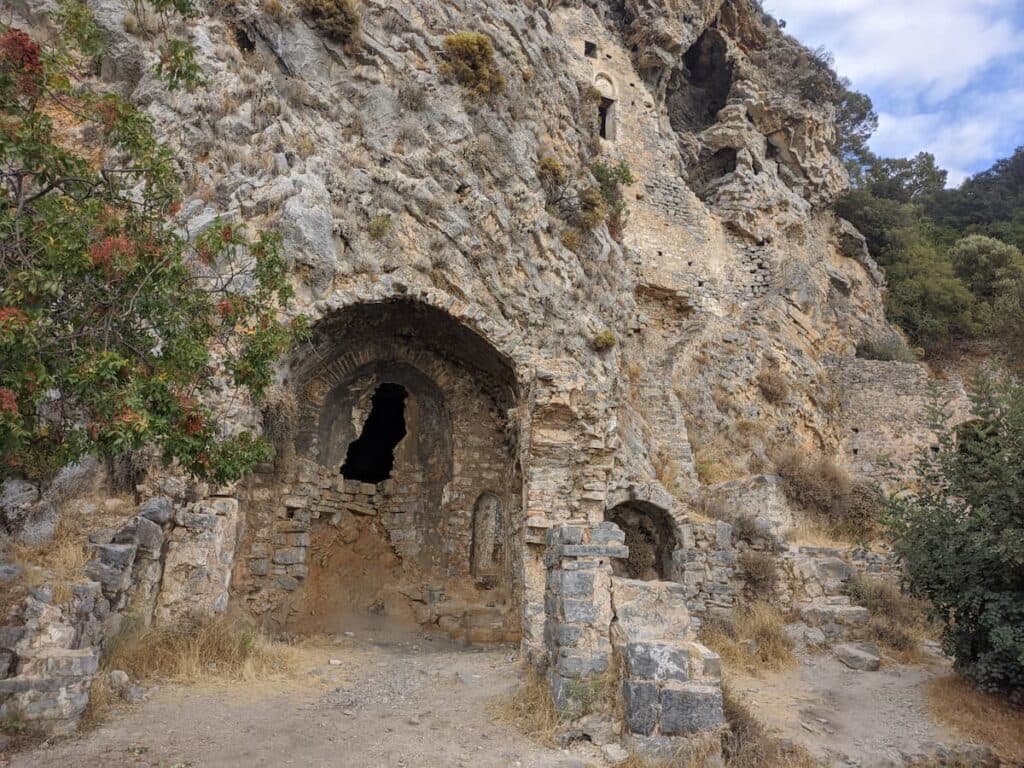
The monastery itself is modest. The main structure is compact, with two levels and small rooms cut into the rock, and there is no decoration to speak of inside. Look closer and you find worn interior walls, internal steps and openings facing straight out over the water.
Worth knowing: Afkule is far smaller and more weathered than the cliffside monastery complexes many visitors picture. Do not expect a restored site with walkways and railings. What makes it worth the walk is the setting, not the scale.
How to Get to Afkule Monastery from Fethiye
From Fethiye centre, most visitors go via Kayaköy and continue along the Gemiler road to the Afkule turn-off. The drive is around 12–13 km, roughly 25–35 minutes depending on traffic through the village.
Afkule Monastery Map
Use the map pin as a rough guide rather than a driving destination. It is close enough to help you find the start of the forest track, but the final approach is on foot, and you should follow the walking path carefully towards the cliffside.
By Dolmuş
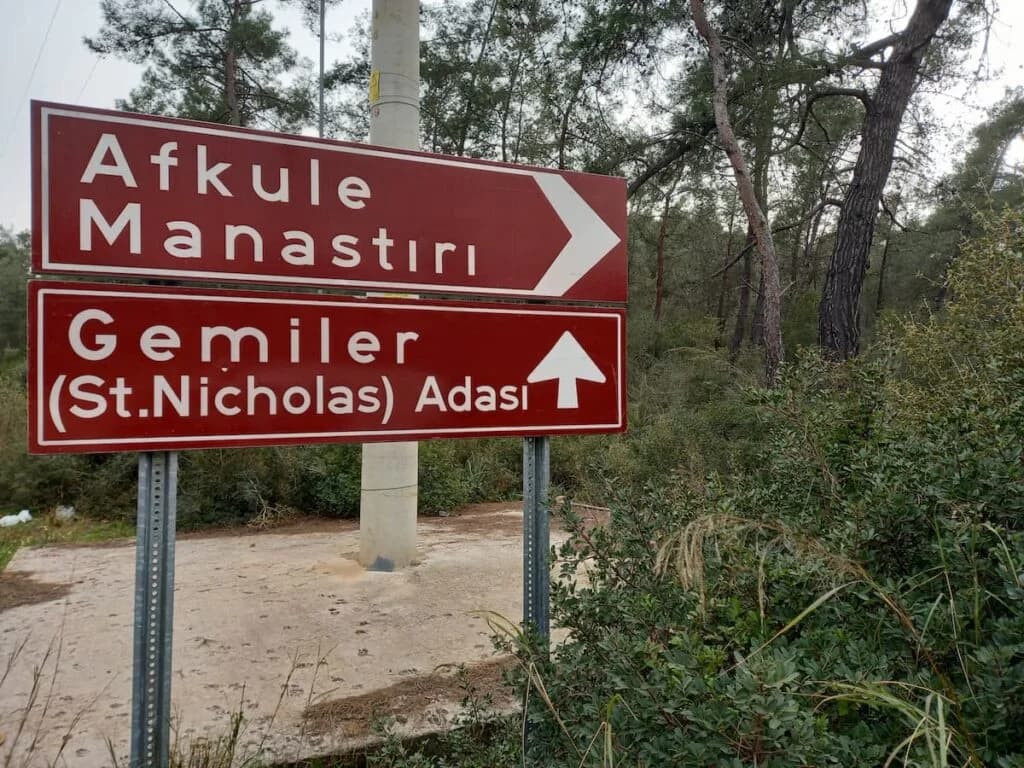
Take the Fethiye–Kayaköy dolmuş and ask whether it continues towards Gemiler. In summer, services are usually more frequent because the beach route is busier. If yours continues, ask the driver to drop you at the Afkule turn-off; if it stops in the village, walk on to the sign and the start of the forest track.
This is the cheapest way to get close to Afkule, but it takes the longest. Check the return times before you start walking, especially outside peak summer or if you plan to stay late in the day. Mobile signal can be patchy in the hills, so do not count on looking them up once you are on the trail.
By Car
A car gives you much more flexibility, especially for the return journey. Once you are through Kayaköy, look carefully for the Afkule sign on the right-hand side of the road. It is easy to miss, so slow down as you approach.
Once you leave the Kayaköy–Gemiler road, you are on a rough, uneven forest track. Depending on its condition and the type of vehicle you have, you may be able to continue part of the way. Still, do not assume you can drive close to the monastery itself. If you have a car with low ground clearance, it is wiser to stop further back and continue on foot.
At the end of the drivable section, park carefully without blocking the track or any route used for local access.
On Foot from Gemiler Beach
There is also a less-used route from Gemiler Beach, a departure point for St Nicholas Island. A steep path leads up through the hills towards the monastery without rejoining the main road. It is less clearly marked and more demanding than the forest track from the Kayaköy–Gemiler road, and the climb from the beach takes around 30–45 minutes one way, depending on your pace.
This option works well if you are spending time on the beach and want to include Afkule on the same day.
You can also do this walk the other way round. After visiting Afkule, head down to the beach in around 25–35 minutes on foot. It is a good way to end the day, with a swim in the sea and a rest at the small snack bar by the beach, although you should not count on it being open outside the summer season. Return services from Gemiler also thin out later in the day.
For visitors who prefer not to drive: You can also visit Afkule by private transfer from Fethiye, Kayaköy or Ölüdeniz. Your driver drops you at the start of the path and picks you up afterwards, so you do not need to worry about parking, rough tracks or return dolmuş times. The Fethiye Tours team can help arrange this, especially if you want to see Afkule, Kayaköy, Gemiler or Ölüdeniz on the same day.
The Walk to Afkule: What to Expect
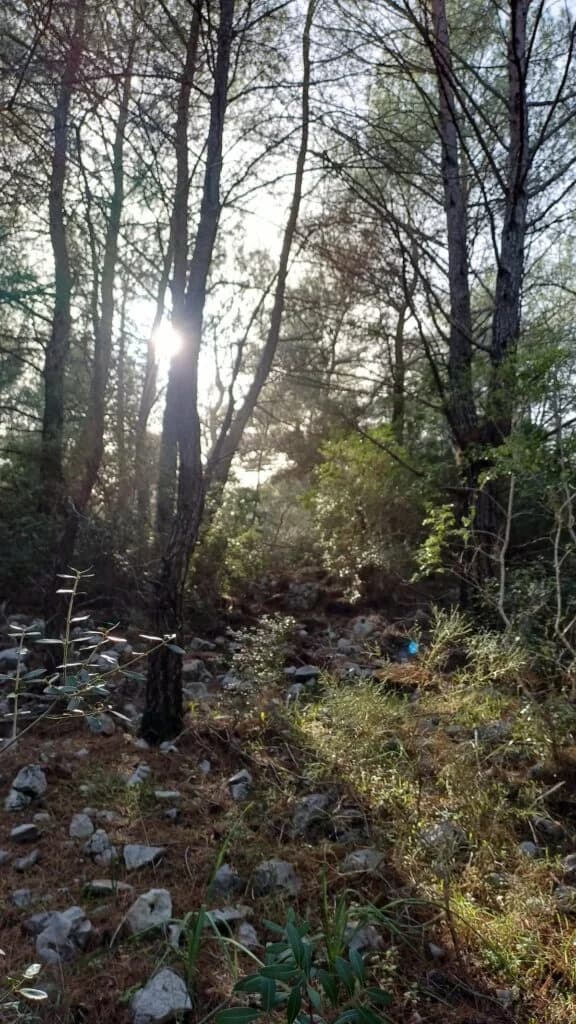
The first part of the walk is fairly gentle. The track runs through pine forest, with shade in many places and occasional views back over the surrounding hills.
Keep an eye out for the smaller details along the way: wild thyme and other herbs, spring wildflowers, butterflies and small birds moving between the pines. Closer to the open cliffside, larger birds sometimes glide on warm air rising from the slopes.
Walking time varies considerably depending on your starting point. If you can drive most of the way along the forest track, the ruins may be only 15–30 minutes away on foot. If you start from Kayaköy village, or if road conditions force you to leave the car further back, the walk can take much longer, especially if you stop often for photos or take extra time to find the right path.
You may come across painted red and yellow marks, arrows or informal stone markers along the way. They can help, but they should not be your only guide. Trail markings fade, stone markers get moved and signs are not always maintained.
Pay particular attention when you reach the more open area above the ruins. After the forest section, the route descends towards the cliffside.
Safety note: Take the last stretch slowly. The stones can move underfoot, the rock can be slippery after rain and dry summer dust has much the same effect. At the ruins themselves, do not lean on old walls, climb unstable sections or step close to the edge for a photograph.
The route is not technically demanding, but in summer the heat, the dust and the return climb can make it feel harder than the distance implies.
What You Will See at the Ruins
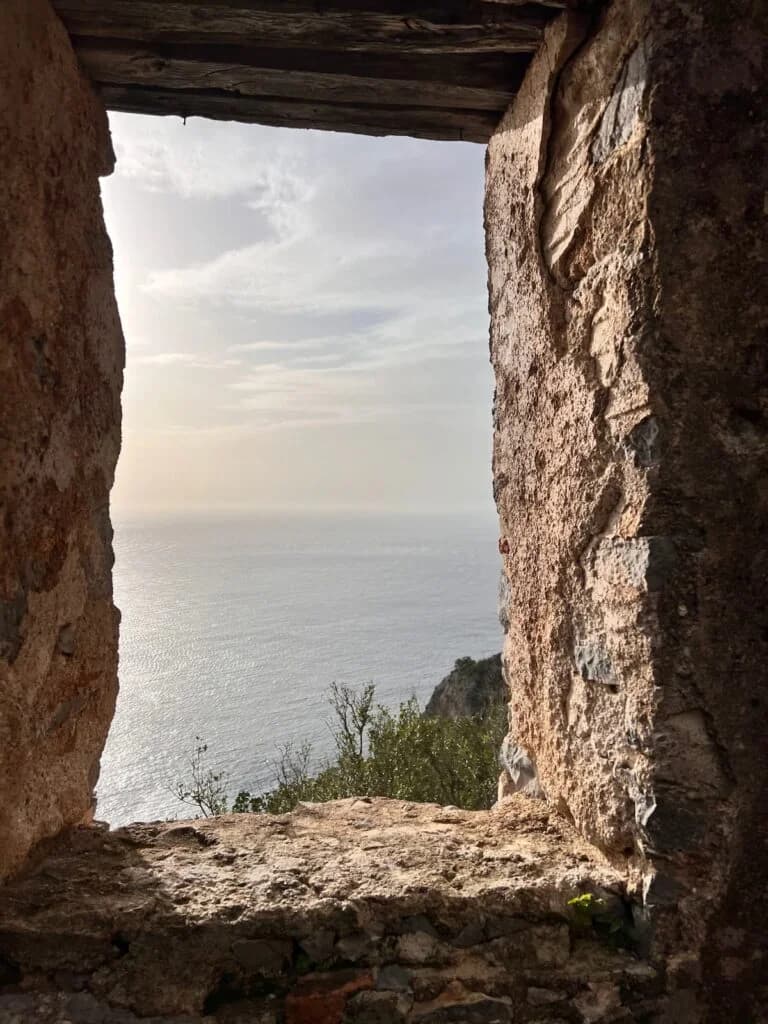
From the upper level, nothing stands between you and the open sea: bare rock behind you, a sheer drop below and the horizon beyond. The setting feels remote, even though the busier resort areas are only a few kilometres away.
Side paths lead on beyond the main ruins, but none of them is an official visitor route. Only continue if you are confident on uneven terrain, have enough daylight and know you can return the same way.
A Small Cave and Cistern Near the Ruins
Below the main structure are two features that are easy to miss if you only stop at the upper level. From the base of the ruins, a narrow path runs left, as you face the sea, to a rocky area where a small cave opens into the hillside and a cistern once held rainwater. They are minor details, but they answer a practical question: how anyone living here kept a supply of water.
This is an optional detour rather than a standard part of the visit. The path can be uneven, narrow or unclear depending on conditions. If it feels slippery or hard to follow, stay up by the monastery and enjoy the sea view from there.
Is Afkule Suitable for Everyone?
Afkule is not a technical hike, but it is not a casual stroll either. The path is uneven, and the final approach runs close enough to the cliff edge that you need to be steady on your feet.
The route is not suitable for wheelchairs or pushchairs. It is also not a good choice for very young children who may run ahead near the cliffside. Older children who are used to walking may enjoy it, but adults should stay close, particularly on the descent and around the ruins.
Anyone with knee problems, balance issues, vertigo or a strong fear of heights should think carefully before continuing all the way down. You do not need to explore every corner of the site to appreciate Afkule. You can still get an excellent view from the safer open areas above the ruins.
If you are travelling alone, tell someone where you are going. Avoid arriving close to sunset, as you need enough daylight left to return safely. It feels peaceful here, but this is still a rural path, a long way from any help.
Best Time to Visit Afkule Monastery
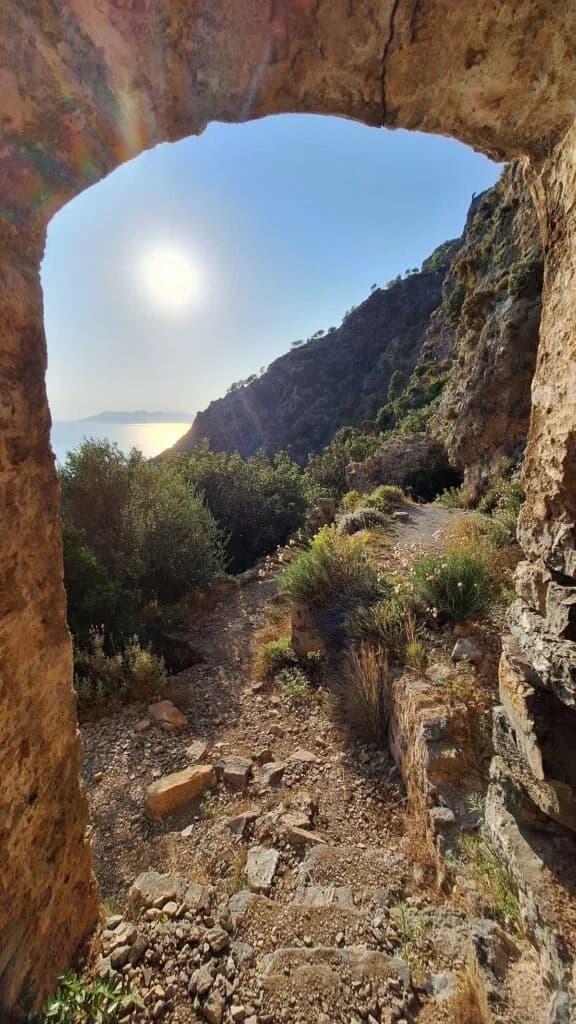
Morning brings cooler temperatures, a quieter trail and softer light across the hills. Late afternoon is better for photography because the cliff face is no longer washed out by the harsh midday sun and the sea takes on a deeper blue.
Sunset is tempting, but do not leave it too late to start back. Once the light drops, the forest track and loose stones are much harder to make out.
Midday in July and August is the least comfortable time to go. In peak summer, start early or go later in the day, wear a hat and carry plenty of water.
Spring is one of the most rewarding seasons for this walk. The Kayaköy countryside is greener and temperatures are milder than in high summer. Autumn can also be excellent once the worst of the heat has passed. Winter visits are best kept to dry spells, since rain leaves the rock on the final descent slippery, and transport services run less often.
How to Combine Afkule with Nearby Places
Most visitors pair Afkule with Kayaköy Ghost Town, either before or after the walk. Kayaköy was abandoned in the 20th century; Afkule was abandoned so long ago that nobody is certain when.
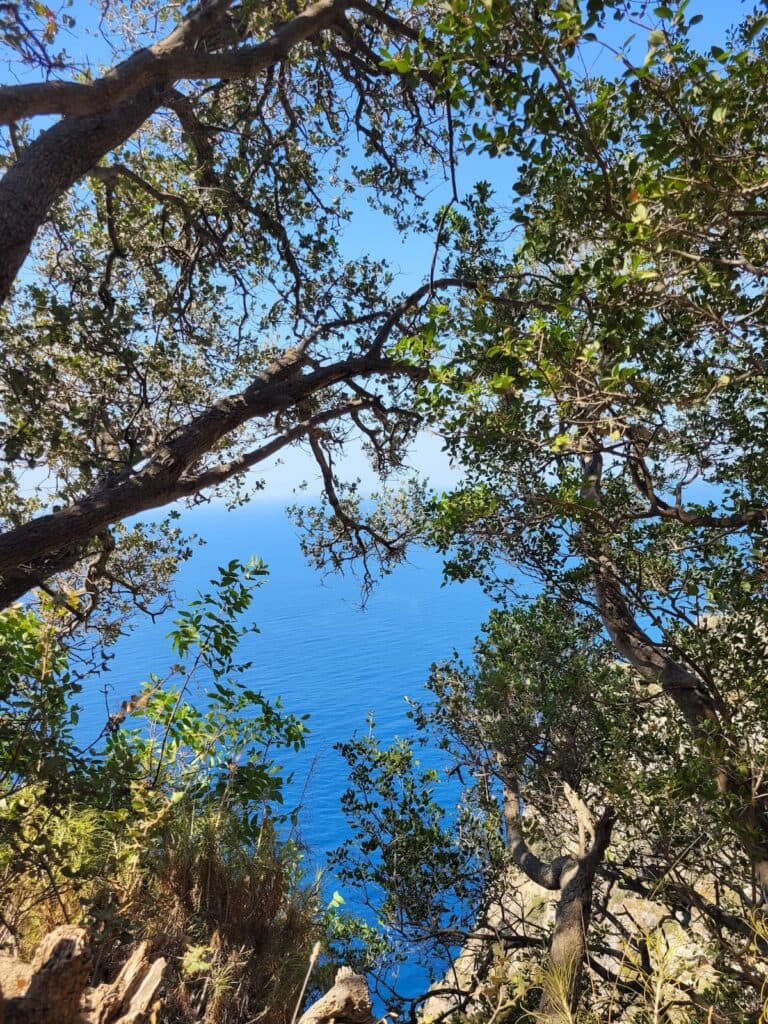
If you carry on towards the coast, Gemiler is an easy next stop. The area around the beach and St Nicholas Island, also known as Gemiler Island, has its own Byzantine remains and open sea views. Afkule and the island are very different experiences, but visiting both shows how this coastline was used during that era, from small cliffside retreats to larger island settlements.
For a fuller day, you could start in Kayaköy in the morning, walk to Afkule before the heat builds up, then head towards Gemiler or back to Ölüdeniz. If your priority is swimming and beach time, follow the walk with an afternoon on the coast. If you are more interested in history, pair Afkule with Kayaköy in the morning and Fethiye's old town in the afternoon.
Local tip: If you are relying on the dolmuş, do Afkule first and Kayaköy second. The village has shade, cafés and a dolmuş stop for the return journey; the Afkule track has none of those, and it is the part of the day you least want to be rushing.
Frequently Asked Questions About Afkule Monastery
Is Afkule Monastery worth visiting?
+
Yes, if you enjoy quiet ruins, coastal views and walks on uneven ground. It is free, usually uncrowded and easy to combine with Kayaköy or Gemiler.
Is Afkule the same as Gemiler Island?
+
No. Gemiler Island, also known as St Nicholas Island, is a separate site reached by boat. Afkule is on the mainland, cut into the cliffs between Kayaköy and Gemiler, and is reached on foot.
Can you drive all the way to Afkule Monastery?
+
No. You can drive part of the way along the forest track, depending on conditions and your vehicle, but the final approach is always on foot. Cars with low ground clearance may need to stop further back.
Are there any facilities like toilets or shops at Afkule?
+
No. There are no shops, cafés or toilets at the ruins or along the forest trail. Bring what you need before leaving Kayaköy or Fethiye.
How long is the walk to Afkule?
+
From the end of the drivable forest track, allow 15–30 minutes each way, or around 1–1.5 hours in total with time at the ruins. From Kayaköy village, allow around 3 hours there and back. From Gemiler Beach, the climb takes 30–45 minutes one way.