
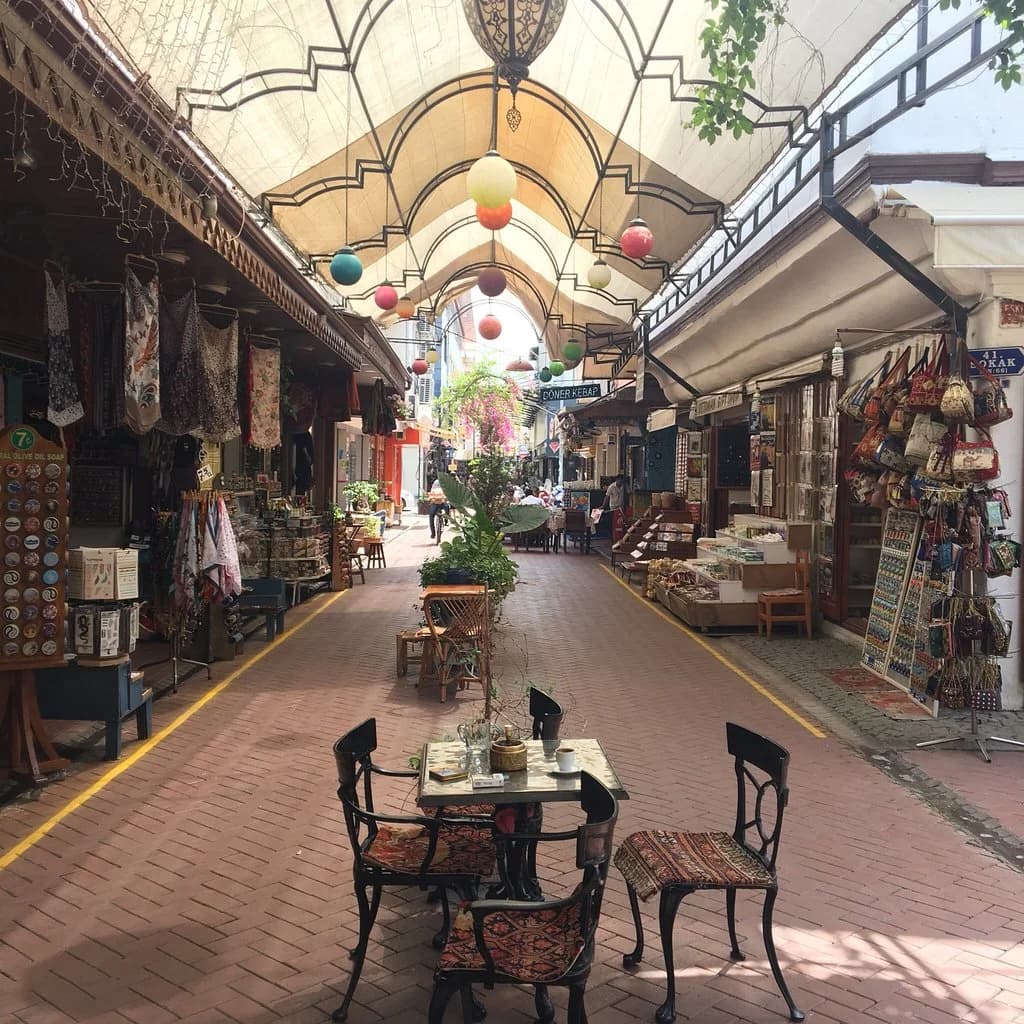
Paspatur is Fethiye's historic bazaar quarter, better known to visitors as Fethiye Old Town. It is a small area of narrow pedestrian streets, old shopfronts and a handful of stone buildings that survived the 1957 earthquake.
Much of the town was rebuilt afterwards, so Paspatur is a rare central district where something of the older Fethiye still comes through. It is compact rather than grand, and there is no set route: shaded lanes, weathered façades and the occasional carved doorway or fountain.
What to See in Paspatur: Suggested Walking Route
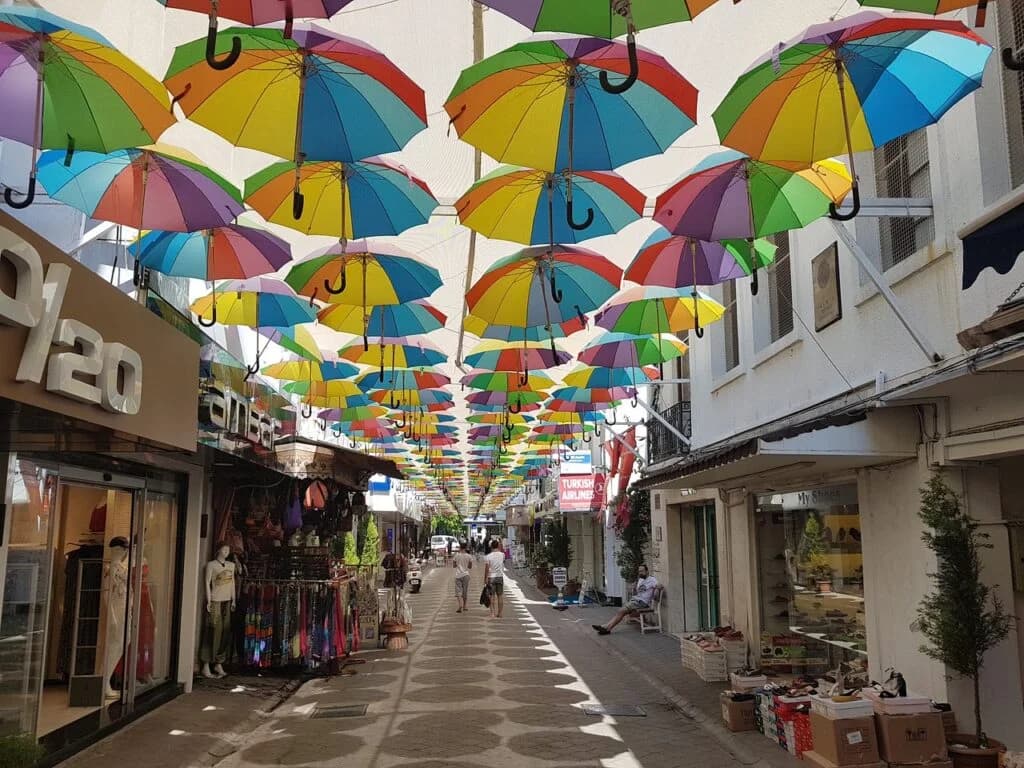
There is no single headline attraction here. What you come for is what you find along the way: Umbrella Street, the Paspatur fountain, the historic hamam and the bazaar shops, with the waterfront a few minutes further on.
Start at the mosque end of the bazaar, follow the lanes wherever they lead, then head down towards the sea. There is no wrong way round, but the route below is an easy one to follow.
Step-by-Step Route
- Start at Yeni Hamidiye Mosque: This is the easiest place to begin if you arrive by dolmuş or come in on foot from the town centre.
- Stop at the Paspatur fountain: It stands just beside the mosque and is one of the area's best-known landmarks. According to local legend, anyone who drinks from it once will always find a reason to return to Fethiye.
- Continue through the bazaar lanes: Follow them past old stonework, worn steps and traditional shopfronts.
- Look out for the old hamam: Tarihi Fethiye Hamamı, on Hamam Sokak, dates from the 16th century and is one of Paspatur's surviving Ottoman-era buildings. It still operates as a Turkish bath.
- Head for Umbrella Street: The street is quieter before the shops open, and the softer morning light suits the umbrellas better than the harsh contrast of the midday sun. If you are walking this route in the afternoon, come back another morning for the photographs.
- Finish at the harbour and ancient theatre: Carry on along the seafront for coffee, dinner or sunset views.
Optional detour: If you loop back through the bazaar, pick up pistachio baklava on the way. It is buttery and heavy on the nuts, best eaten warm on the spot, and the shops will box it up if you would rather take some home.
How to Get to Fethiye Old Town (Paspatur)
Central Fethiye is small enough to cover on foot. If you are coming by dolmuş (the shared minibuses that run on fixed routes around town), get off at the central stop beside the white Yeni Hamidiye Mosque, about eight minutes on foot from the bazaar. Dolmuşes from Ölüdeniz and Kayaköy stop nearby, and the Çalış dolmuş leaves from the street behind the mosque.
Drivers can use the paid car park beside the bazaar; the lanes themselves are pedestrianised. For an overview of the town's different areas, see our complete guide to Fethiye.
Shopping in Fethiye Old Town
The bazaar is no longer where locals do their main shopping, and it is calmer and less pushy for it. This is somewhere to browse at leisure rather than to shop in earnest: leather goods, jewellery, spices, Turkish delight, textiles and souvenirs are all still sold here, but nobody is in a hurry.
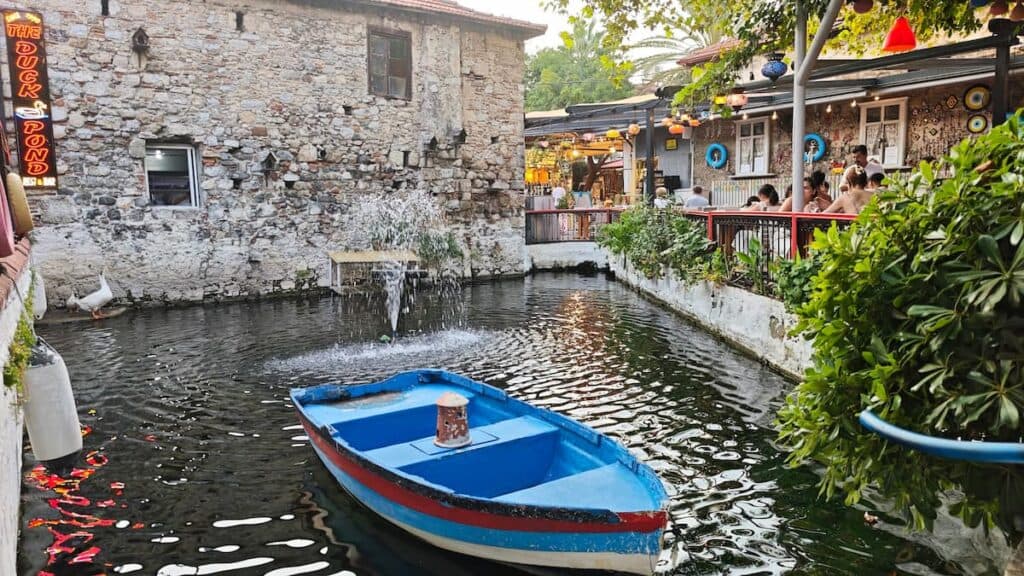
Pop into a few shops, stop for a coffee, then carry on towards the seafront. Some of the lanes also have bars and meyhanes (traditional Turkish taverns) among the shops, and these are the places that draw the evening crowd once the shutters come down. For fresh produce and everyday essentials, the Fethiye Tuesday Market and the main streets around the town centre are the more practical option.

Best Time to Visit Fethiye Old Town
Late afternoon or evening generally works best. The heat has gone out of the streets by then, the cafés fill up and the lanes get busy. Mornings are the quieter alternative, although many of the shops will not have opened yet.
Is Fethiye Old Town Worth Visiting in Summer?
Yes. It remains easy to explore even in high summer: the quarter is small and the lanes are partly shaded, which makes it more comfortable than the open waterfront. Treat it as a short, relaxed visit rather than a long outing in the midday heat.
In summer the quarter feels livelier, with shops and cafés open later into the evening. In winter it is much quieter and more like an ordinary local neighbourhood, although some of the smaller shops close for the season.
Beyond the Bazaar: Harbour, Ancient Theatre and Rock Tombs
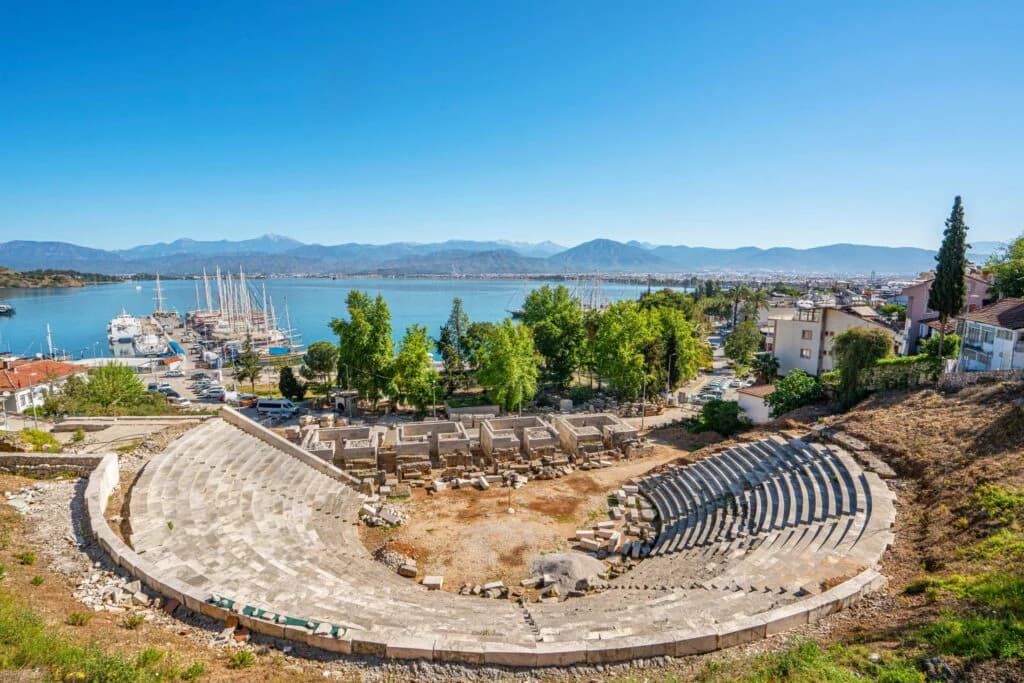
From the bazaar, the theatre and harbour are close enough to add on to the same outing. The Fethiye Ancient Theatre was part of Telmessos, the city that once occupied the site of modern Fethiye. Telmessos was an important Lycian settlement, although the remains visible at the theatre today are Roman.
The site is closed to visitors for restoration as of September 2026, but the stage building is clearly visible from the waterfront road, a short walk from Paspatur. The harbour is just beyond it, with a promenade along the marina, fish restaurants and boats running day trips like the 12 Islands boat tour out into the bay. From the theatre, ten minutes uphill brings you to the Amyntas Rock Tombs, set into the limestone cliffs above, with views over Fethiye.
To make a half-day of it, continue from the tombs towards Fethiye Castle and the Aşıklar Tepesi (Lovers' Hill) viewpoint, then loop back towards the town centre and harbour.
Where to Stay Near Fethiye Old Town
Paspatur is an atmospheric part of central Fethiye to stay in. There are several boutique hotels in the quarter, some of them in restored stone buildings, and the town's restaurants and seafront are a couple of minutes away on foot. It suits travellers who want to be in the middle of town rather than out in Ölüdeniz or Çalış. The one caveat is noise: the bazaar can be lively until late, so ask for a room at the back if you sleep lightly.
The old town fits naturally into a wider route around the centre. If you would like help putting one together, or want to fit Paspatur around other things to do in Fethiye, get in touch with our local team.
Message Fethiye Tours on WhatsApp →