
📅 Last updated: 29 September 2026
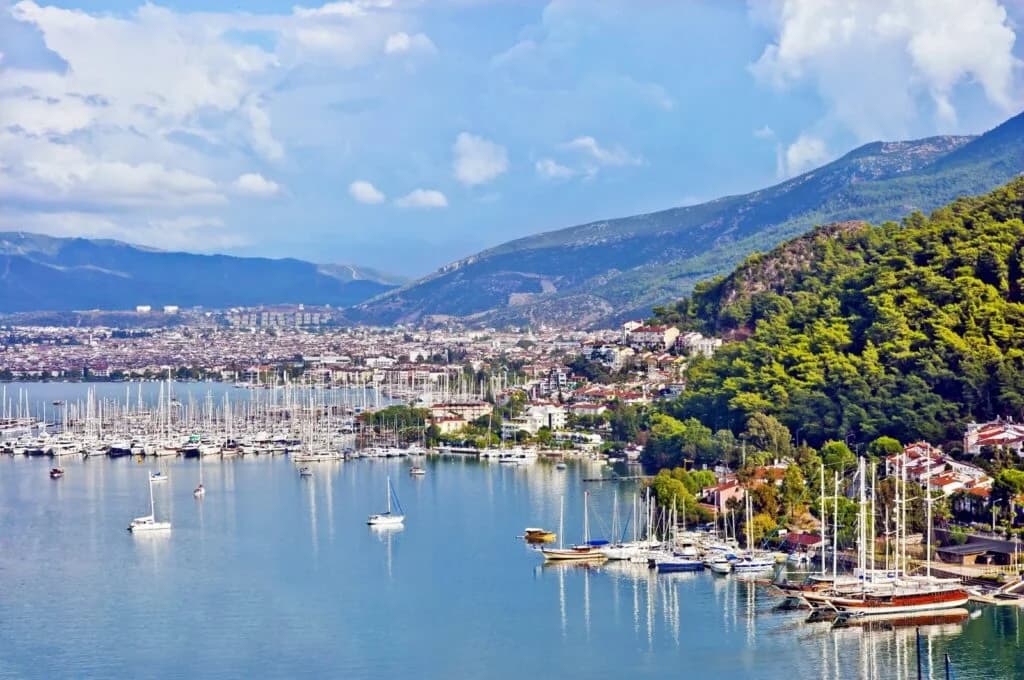
Fethiye is a harbour town in Muğla Province, on Turkey's south-west coast.
It lies between Marmaris and Antalya, with Dalaman Airport (DLM) 45–60 minutes away by road.
This is not a self-contained beach resort. It is a working town set around a wide bay, with marinas, seafront promenades, beaches, hillside villages and open countryside nearby.
Many visitors use Fethiye as a base for exploring the surrounding region. You can stay in the town centre for restaurants, harbour life and transport links, and head to Ölüdeniz or Çalış for beach days. Day trips to Saklıkent Gorge, Kayaköy and the coast around Faralya and Kabak are easy to arrange wherever you stay.
This guide covers where Fethiye is, how to get there, the best time to visit and where to stay. If you have already decided on Fethiye and want to skip ahead, go straight to our full guide to things to do in Fethiye.
Where Is Fethiye in Turkey?
Fethiye is on the Muğla coast, about 45 km from Dalaman Airport, the nearest international airport.
Approximate road journey times from Fethiye:
| Destination | Approximate Journey Time |
|---|---|
| Dalaman Airport (DLM) | 45–60 minutes |
| Marmaris | About 2 hours |
| Kaş | About 2 hours |
| Antalya | 3.5–4 hours |
Times are approximate and can be longer in summer traffic. The Antalya time is for the inland route; the coast road through Kaş takes closer to five hours.
The Lycian Way, a waymarked long-distance walking route, begins at Ovacık, a short dolmuş ride from central Fethiye. Dolmuş services are shared minibuses that run on set routes across the region.
Fethiye on the Map
The town curves around a sheltered bay, with the mountains rising behind it. Where you base yourself makes a real difference to the trip, and the five main areas are set out further down this page.
Is Fethiye on the Aegean or Mediterranean Coast?
Fethiye lies on Turkey's Mediterranean coast.
The confusion arises because Muğla Province belongs to Turkey's Aegean Region and has coastline on both seas, with the Aegean to the north-west and the Mediterranean to the south-east. Fethiye is on the Mediterranean side, on the stretch of south-west coast widely known as the Turquoise Coast.
How to Get to Fethiye
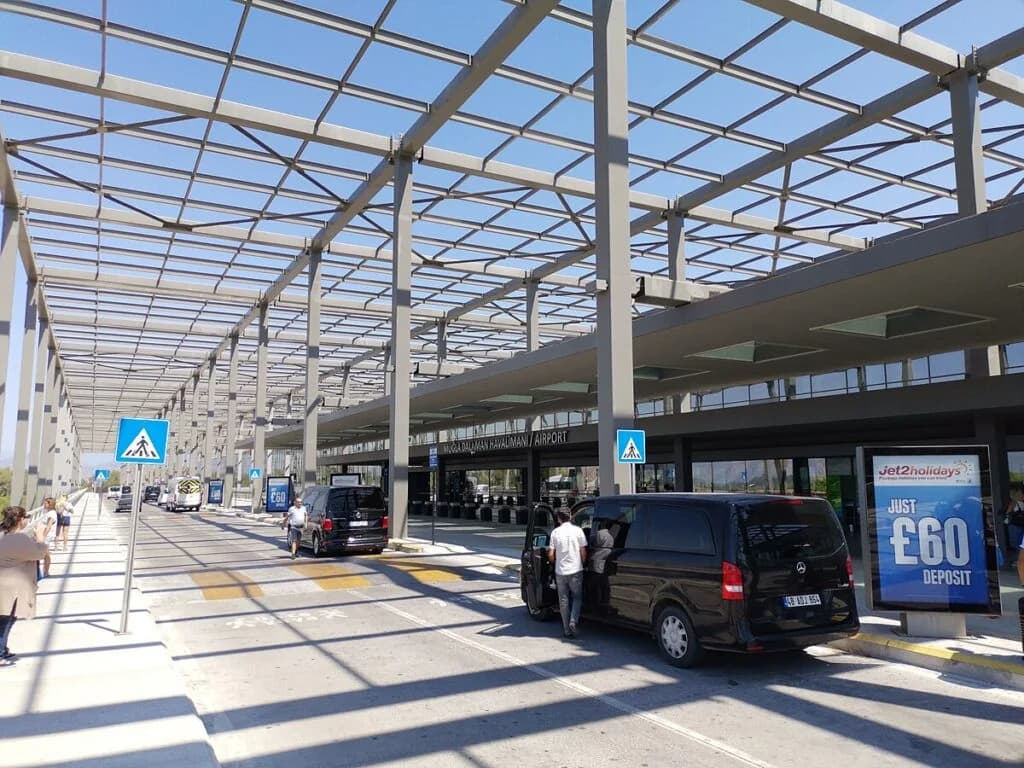
- Airport shuttle buses: Services run from Dalaman Airport to the Fethiye otogar, the intercity bus station. From there you can continue by dolmuş or by taxi to Ölüdeniz, Hisarönü, Ovacık or Çalış.
- Private transfer: A door-to-door Dalaman Airport transfer takes around 45–60 minutes to central Fethiye, or up to about 75 minutes to resort areas such as Ölüdeniz and Hisarönü, depending on traffic and time of day. It is worth the extra cost if you are arriving late at night, have children with you or are travelling as a small group with luggage.
- Intercity bus: Regular services from Antalya, Izmir and Istanbul arrive at the Fethiye otogar.
- Ferry from Rhodes: Seasonal ferries usually operate between Fethiye and Rhodes during the warmer months, but schedules vary by year and operator, so confirm the current timetable before you plan around it.
- Need full transport details? See our complete guide to getting to Fethiye.
What Fethiye Is Known For
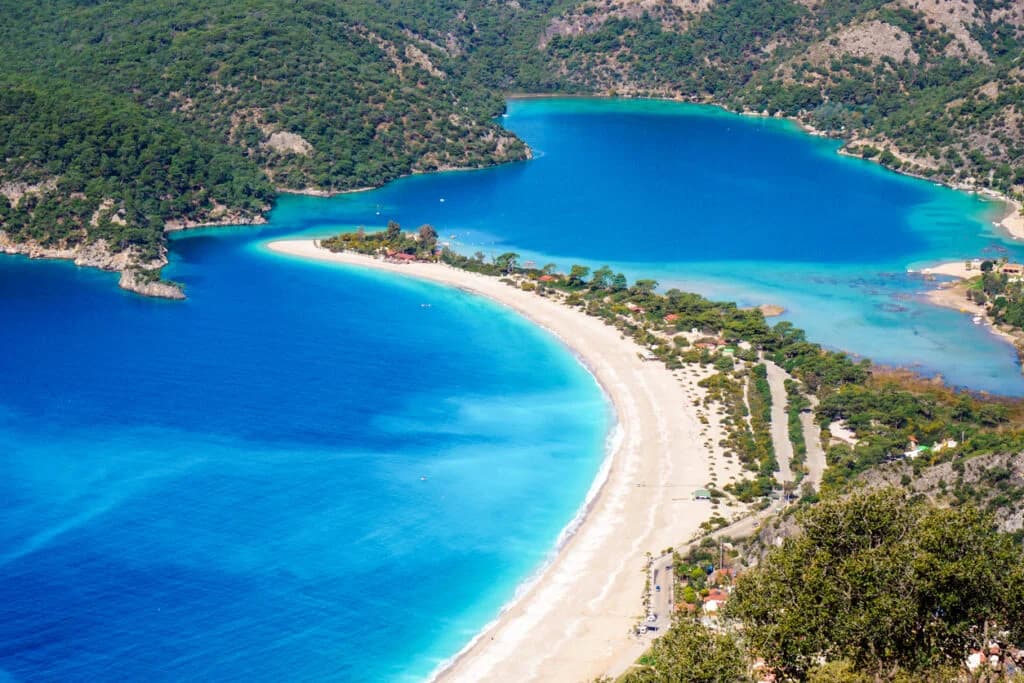
Fethiye is best known for its coastline, its outdoor activities and its Lycian heritage.
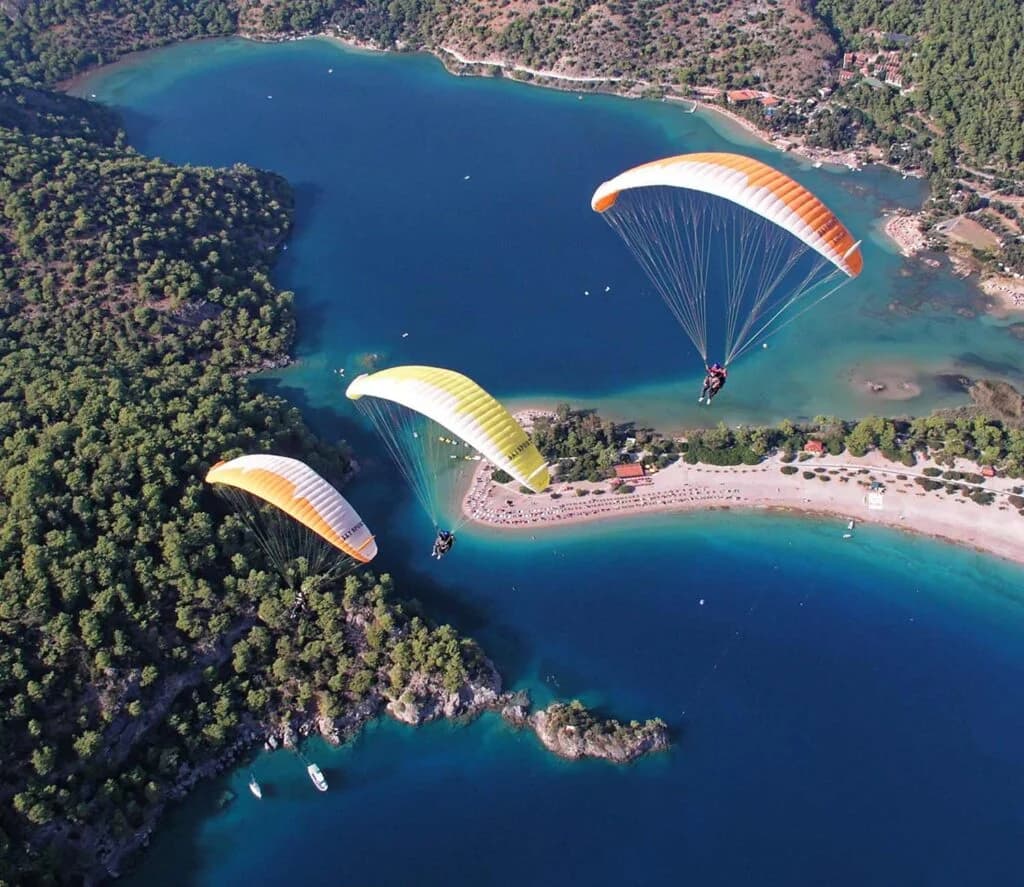
Three sights draw most visitors: the Ölüdeniz Blue Lagoon, the Amyntas Rock Tombs above the town and the mountain of Babadağ. The tombs are cut into the cliff face, and Babadağ, reached by cable car, is the take-off point for tandem paragliding.
Beyond those, Paspatur Old Town is the network of lanes behind the harbour, with bars, carpet shops and restaurants. At the Fish Market in the middle of the quarter, you buy fresh fish from the stalls and hand it to one of the surrounding restaurants to cook. Several of the best sections of the Lycian Way begin within an hour's drive of the town.
Boat trips are one of the main reasons people come to Fethiye. The full-day 12 Islands boat tour is the most popular way to see the bay and its islands.
Is Fethiye Worth Visiting?
Fethiye is a good choice if you want a coastal holiday that combines scenery, historical sights, boat trips and a town that is more than a resort strip.
Its main strength is variety. Within a few days you can visit the rock tombs, spend a day on the water and eat at the Fish Market in the evening, all from the same hotel. It particularly suits travellers who like to mix beach days with short trips and unhurried evenings in town.
How much of this you fit in depends on where you stay, so it is worth reading our overview of the five main areas before you book.
When Fethiye May Not Be the Right Choice
- If you want everything on your doorstep: The town centre, the beaches and the villages are not within a short walk of one another, and moving between them means a dolmuş, a taxi or a hire car. Parking in central Fethiye and Ölüdeniz is difficult at the height of summer.
- If you dislike high-season crowds: July and August are busy at the popular beaches and on the main coastal roads.
- If you want a traditional all-inclusive resort holiday: All-inclusive hotels do exist in the wider area, but Fethiye suits travellers who are happy to eat out, book their own boat trips and plan their own days.
- If you want a seafront room on a small budget: Seafront rooms in Ölüdeniz cost noticeably more than rooms of the same standard in central Fethiye or in the villages inland.
Best Time to Visit
For most holidaymakers, the main beach and boat trip season runs from April to October, while central Fethiye stays busy all year.
May and September are the most comfortable months: the sea is warm enough to swim in and it is not too hot to walk or sightsee. June to August is the hottest and busiest period, and suits travellers who want a lively summer atmosphere and do not mind crowded beaches. Spring is the best time for walking parts of the Lycian Way, and early autumn brings warm days with far fewer people.
Read our detailed Fethiye weather guide for monthly temperatures, rainfall and sea conditions.
What Should You Book in Advance in Summer?
Four things are worth securing before you travel in July and August.
- Accommodation: Hotels and villas in Ölüdeniz, Çalış and central Fethiye fill up quickly in high season, and the ones nearest the seafront go first.
- Airport transfer: Book ahead if you are landing late at night or heading straight to somewhere outside the town centre.
- Paragliding: Tandem paragliding in Ölüdeniz runs well beyond summer, but flights depend on wind conditions and operator schedules. Demand peaks in July and August, so reserve early if you want a particular date or time.
- Boat trips: Popular departures sell out, especially during the peak summer weeks.
Planning note: The Babadağ Cable Car is not a quick stop. The ride takes about 15 minutes each way, but time at the upper stations and the glass bridge, plus queuing in high season, pushes the visit to two or three hours. Allow half a day for it rather than squeezing it into a busy afternoon.
How Many Days Do You Need?
Three days covers the essentials, five allows a day trip and seven leaves room for everything without rushing.
- Three days: Enough for the main sights, with one day at Ölüdeniz and the Blue Lagoon, one day on a boat trip and one day for central Fethiye, including Paspatur Old Town and the rock tombs.
- Five days: A comfortable stay with time for a day trip to Saklıkent Gorge or Kayaköy, plus an evening at Çalış Beach.
- Seven days: Room for both Saklıkent Gorge and Kayaköy, more beach time at Ölüdeniz and Çalış, and evenings in town at your own pace.
Best Areas to Stay in and Around Fethiye
Most visitors stay in one of five areas, and each suits a different kind of trip:
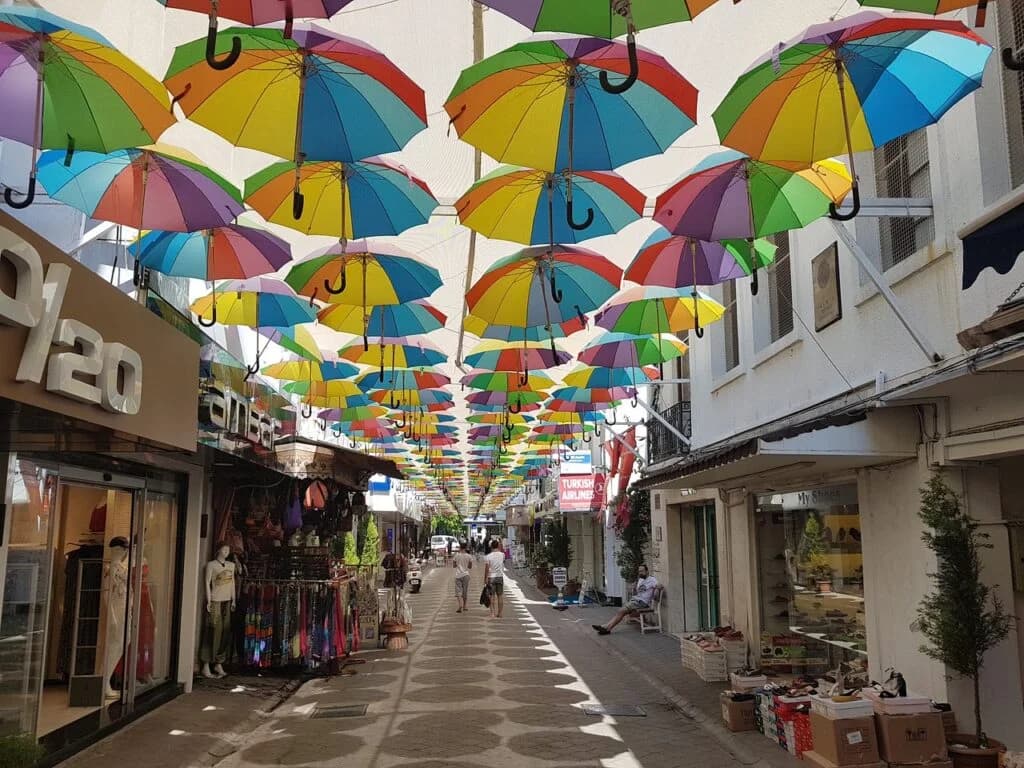
🏛️ 1. Central Fethiye and Paspatur Old Town
Best for: travellers planning several day trips rather than a purely beach-focused holiday. The otogar is here, and most dolmuş routes start from it. The restaurants are aimed as much at locals as at visitors, and the harbour and Paspatur are within walking distance of most hotels.
🌅 2. Çalış Beach
Best for: families and anyone who wants a long, level seafront to walk along in the evening. Çalış faces west, which gives it the best sunsets in the area, and it is quieter after dark than Ölüdeniz.
🍸 3. Hisarönü and Ovacık
Best for: bars, restaurants and a livelier night out, with regular dolmuş services down to Ölüdeniz. Both sit inland in the foothills, high enough that the nights are a little cooler than on the coast below.
🪂 4. Ölüdeniz
Best for: beach holidays, sea views and being within walking distance of the lagoon and the paragliding landing area. It is the most resort-oriented of the five, and the one to book earliest for July and August.
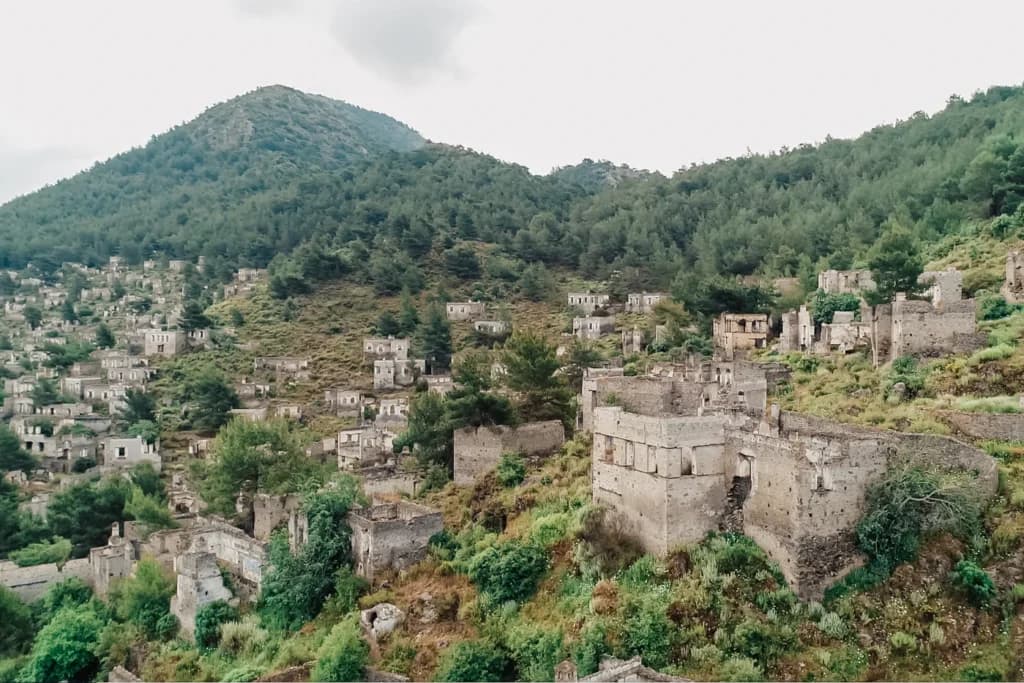
🏡 5. Kayaköy
Best for: villa holidays in a rural setting, with gardens and pools, and quiet evenings well away from the coast. A hire car is all but essential here.
How to Keep Costs Down in Fethiye
What you spend depends heavily on where you stay, and Ölüdeniz is the most expensive of the five areas for both accommodation and eating out.
- Eat away from the seafront: A meal at a lokanta, an everyday Turkish restaurant serving home-style dishes from a hot counter, costs a fraction of the price of a seafront terrace meal, and the cooking is often better.
- Shop at the Tuesday market: The Fethiye Tuesday Market is the cheapest place in town to buy fruit, vegetables, cheese and olives.
- Use the dolmuş: Fares on the shared minibuses are far lower than the taxi fare for the same journey, and the network covers the routes between the main areas.
Is Fethiye Safe?
Fethiye is generally a safe place to visit, whether you are with your family, as a couple or on your own.
The town centre, the seafront promenades and the resort areas stay busy well into the evening, with restaurants and bars open late. Take the usual precautions with your belongings at the Tuesday market and around the otogar, and use licensed taxis or a booked transfer for late-night journeys.
Avoid the steep hiking trail from Faralya down to Butterfly Valley unless you are very experienced and properly equipped. The route is difficult and exposed in places, and it can be dangerous in hot weather.
Safer option: Take a boat from Ölüdeniz if you want to visit Butterfly Valley. If you only want the view, use one of the designated viewpoints in Faralya rather than attempting the descent.
Frequently Asked Questions
How far is Fethiye from Dalaman Airport?
+
Fethiye is about 45 km from Dalaman Airport (DLM). Transfers take 45–60 minutes to central Fethiye and up to about 75 minutes to Ölüdeniz or Hisarönü, depending on traffic.
Is Fethiye closer to Antalya or Marmaris?
+
Marmaris is closer, at about two hours away by road. Antalya is 3.5–4 hours away by the inland route. The coast road through Kaş is scenic but considerably slower, at closer to five hours.
Do you need a car in Fethiye?
+
Not necessarily. Dolmuş services and taxis cover the main resort areas and most popular routes. A car is useful if you want to reach quieter beaches and inland villages, or to combine several places in one day, and it is all but essential if you are staying in Kayaköy.
Is Fethiye's Blue Lagoon free to enter?
+
The public beach at Belcekız is free. The sheltered stretch of water at Kumburnu, which is the part usually pictured as the Blue Lagoon, lies inside a nature park that charges an entrance fee, with parking, sunbeds and umbrellas charged separately.
Is Fethiye safe for solo travellers and families?
+
Yes. The main areas stay busy and well lit into the night. For late journeys, use a licensed taxi or a booked transfer.
We live and work in Fethiye. If you are not sure which area suits your trip, send us a message and we will tell you which one we would recommend.
Message us on WhatsApp →