
The market splits roughly into two. On one side, local shoppers work through the produce and household stalls; on the other, most visitors head straight for textiles and souvenirs. Stallholders call out to passing customers, and people stop at the food stalls for gözleme or freshly squeezed juice.
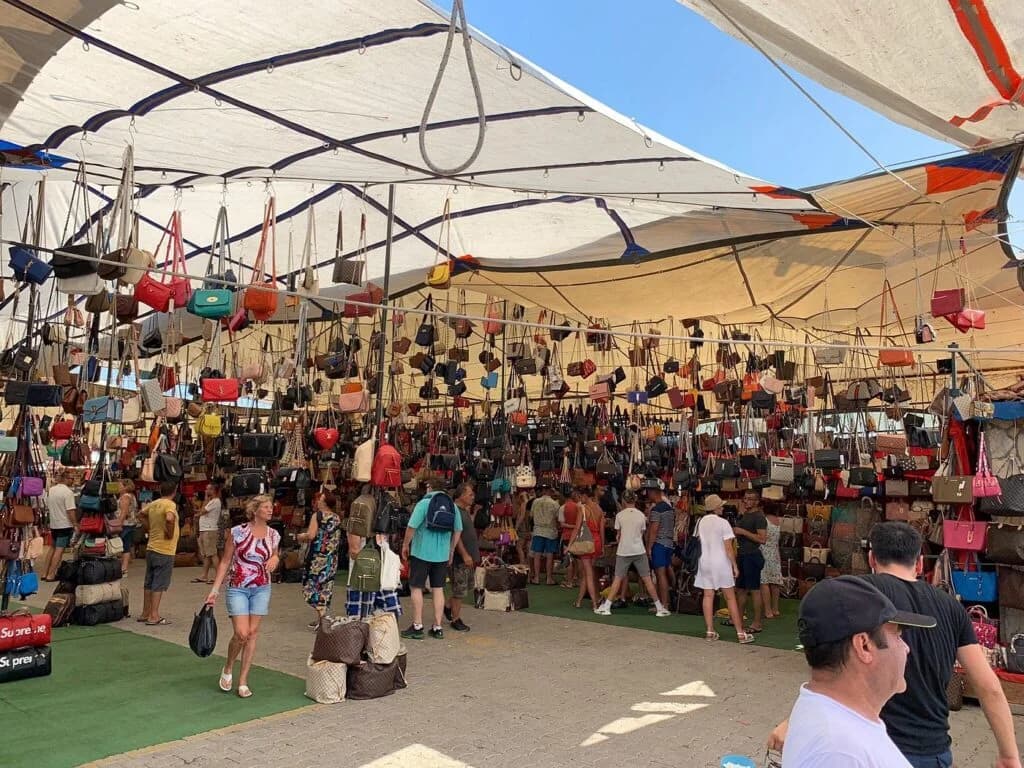
What to Buy
Most of what is on sale falls into a few broad groups:
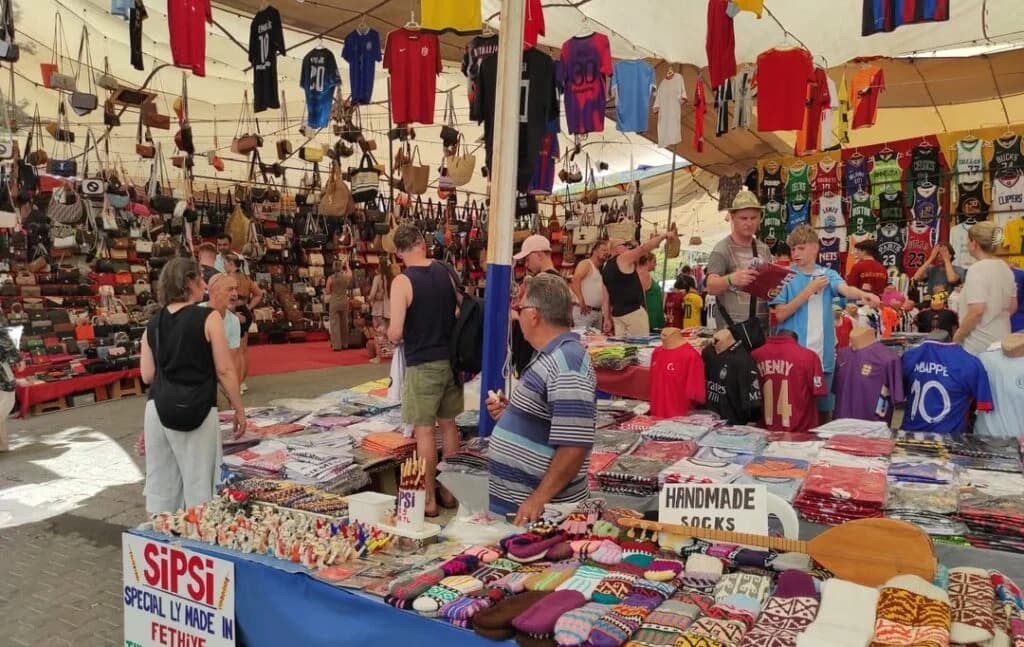
- Turkish cotton towels and peştemals, the flat-woven wraps traditionally used in Turkish baths
- Summer clothing, bags and accessories
- Souvenirs and small gifts
- Household goods and everyday items
- Fresh fruit and vegetables from nearby farms
- Local cheeses, olives and spices
- Street food and drinks, such as gözleme and freshly squeezed juice
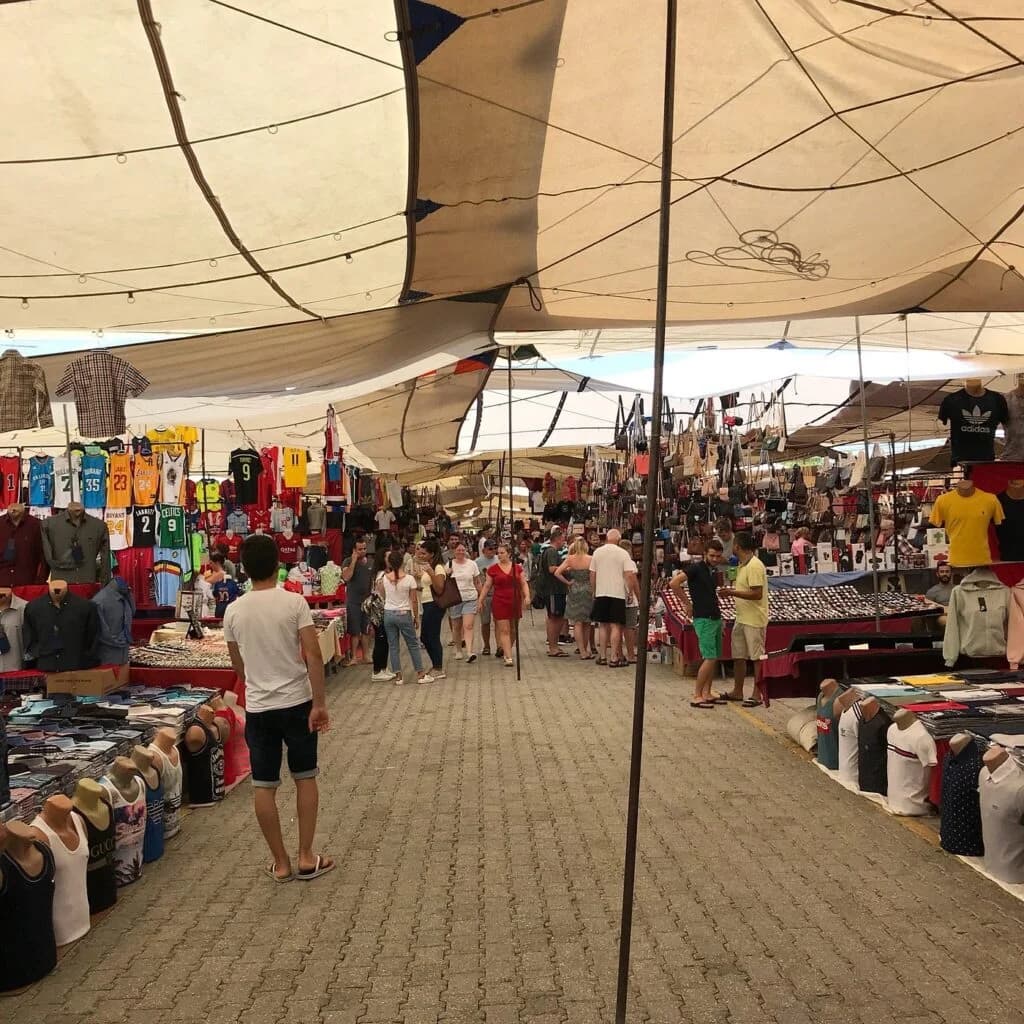
Textiles & Turkish Cotton
The textile stalls take up most of one side of the market. Alongside everyday clothing, bags and accessories, there are plenty of Turkish cotton towels and peştemals, plus lightweight shirts, dresses and cover-ups.
Quality varies from one stall to the next, so take a moment before buying. Feel the weight of the fabric, check the stitching and look at the overall finish. Comparing two or three stalls is worth the effort on the pricier items, particularly towels and peştemals, where the difference in quality is easiest to spot.
Gözleme & Fresh Juice
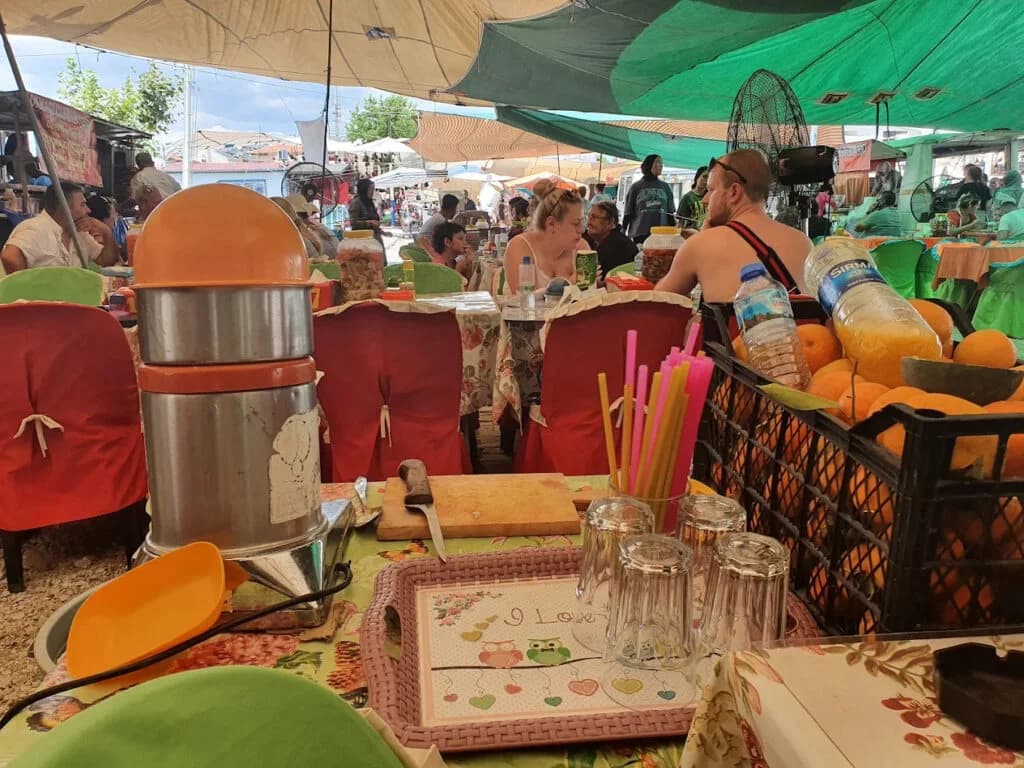
The most popular snack here is gözleme, a thin savoury flatbread cooked to order on a traditional griddle and served hot. Common fillings include feta-style white cheese, spinach and spiced potato.
Order one, then pick up a freshly squeezed pomegranate or orange juice from a nearby stall and find a shaded spot to sit. Together they make a good mid-morning break.
The market area gets very hot around midday, especially in summer. The harbourfront cafés are a short walk away and make the easiest escape, with shade, cold drinks and a view over the boats. If you would rather sit indoors with the air conditioning on, McDonald's and Starbucks are both close by.
Best Time to Visit
The market opens around 09:00 and is at its busiest between 11:00 and 14:00. In summer, arriving before 11:00 makes a real difference: mornings are cooler and considerably less crowded. It runs until around 18:00, though some stallholders start packing up from 17:30.
How Long to Spend
Most visitors spend one to two hours at the market. If you only want to walk through the main aisles, browse a few stalls and stop for a quick snack, an hour is enough.
To shop around for towels and clothing, or to sit down for something to eat or drink, allow closer to two hours. That also leaves time to double back to a stall you liked without feeling rushed.
If you want to carry on browsing afterwards, Erasta Fethiye is around a 15-minute walk away. It is a small modern shopping centre with high-street shops and cafés, and the air conditioning is welcome after a morning in the open air.
Payment & Practical Tips
Cash in Turkish lira is the easiest way to pay at the market. Some stalls also accept euros, US dollars and pounds sterling, and each stallholder sets their own rate. Keep small lira notes and coins to hand for snacks, small purchases and the market's public toilets, which sit next to the food stalls and charge a small fee.
Bargaining is common in the textile, bag and souvenir sections, and stallholders tend to be relaxed about it rather than pushy. Keep it friendly. Fruit, vegetables and food are sold at set prices and are not open to haggling.
📅 Schedule note: The market is held every Tuesday throughout the year. On rare occasions, such as a religious holiday falling on a Tuesday, it may be moved. Word goes round a week or so beforehand, so your hotel or villa owner should be able to tell you.
How to Get to Fethiye Tuesday Market
The market sits right beside Fethiye Stadium, a 10–15-minute walk from the town centre and harbour. For anyone staying in central Fethiye, walking is usually the most straightforward option.
From Çalış, Ölüdeniz or Hisarönü, the dolmuş is a practical choice. These minibuses run into central Fethiye and stop within walking distance of the market. If you are not sure where to get off, tell the driver you want Salı Pazarı.
From Çalış, the summer water taxi is another option. It crosses the bay to Fethiye harbour, and from there the market is about a 10-minute walk. It takes longer than going by road, but the view across the bay makes up for it. If you are planning a day on the water later in the week, our 12 Islands boat trip leaves from the same harbour.
Coming by car takes some planning. Parking near the market gets difficult from late morning onwards, and the surrounding streets fill up fast. Come early if you can. Failing that, park a bit further out and walk in, which is far less trouble than circling for a space.
Guided Option: Tuesday Market and Kayakoy
If you would rather not arrange transport at all, our guided tour includes hotel pick-up from Ölüdeniz, Hisarönü, Ovacık and Çalış, and pairs the market with Kayakoy, the abandoned stone village in the hills above Fethiye.
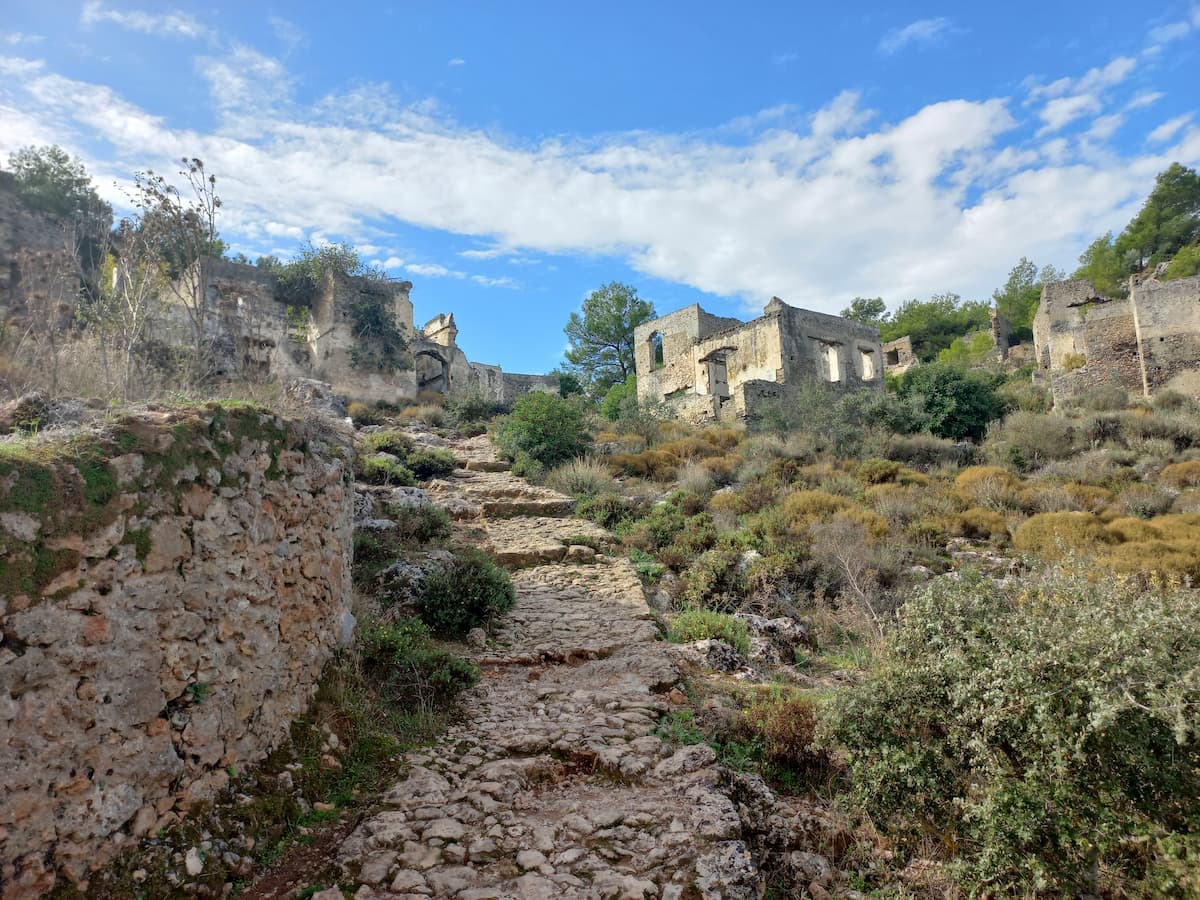
Two hours at the market, a short jewellery centre stop and a guided walk through Kayakoy, with hotel pick-up and return. The tour runs from April to October and is back by mid-afternoon.
View tour detailsThe Canal Walk
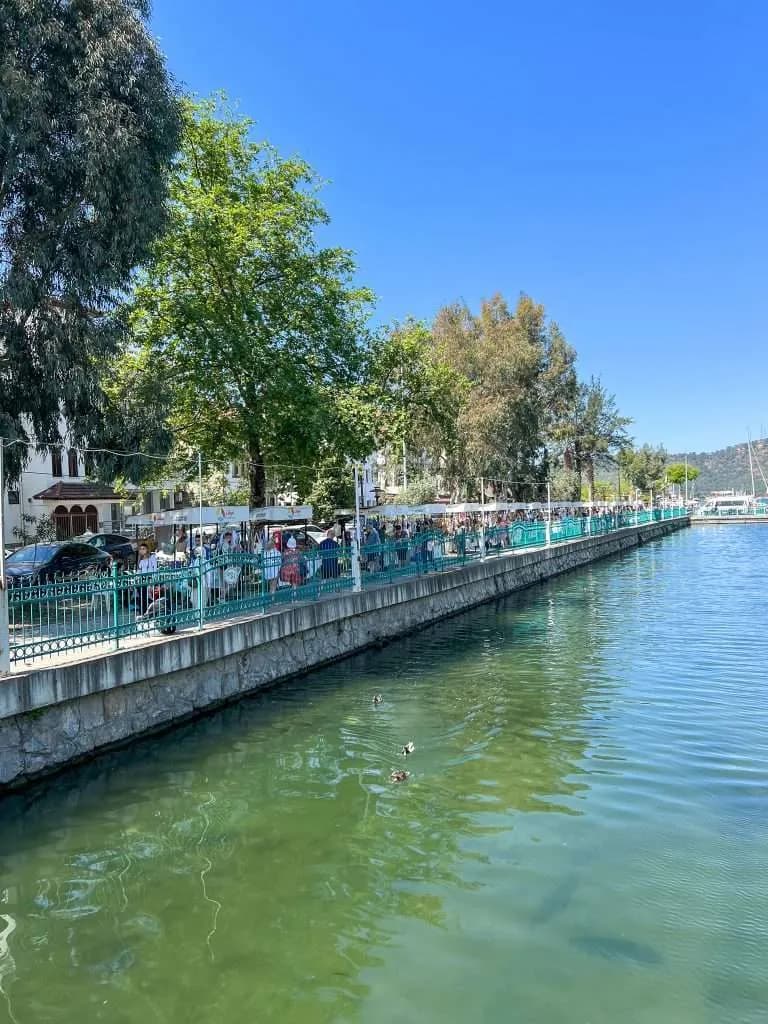
If you are walking to the market from the town centre, take the canal path rather than the main road. It is quieter, shaded in parts and a good deal more interesting to look at.
Keep an eye on the water as you go. You may spot small fish below the surface, and if you are lucky, even a loggerhead sea turtle (Caretta caretta) making its way up the canal.
Combine with Fethiye Old Town (Paspatur)
Fethiye Tuesday Market and Fethiye Old Town (Paspatur) are close enough to visit on the same morning or afternoon. The old town's narrow stone lanes, local cafés and covered bazaar feel quite different from the open-air market, and between them they will easily fill half a day.
In July and August, plan around the midday heat. Arrive at the market around 09:00 so you can move on to Paspatur before midday, or save Paspatur for after 17:00, when the worst of the heat has passed.
Frequently Asked Questions About Fethiye Tuesday Market
Is Fethiye Tuesday Market worth visiting?+
Yes. It is the largest weekly market in the Fethiye area, and the sheer scale is the main draw: hundreds of stalls running from farm produce to towels and clothing. In summer, come early in the morning while it is still cool and quiet.
When is Fethiye Tuesday Market held?+
Every Tuesday, at the Pazar Alanı beside Fethiye Stadium. The market can be moved in the rare event that a religious holiday falls on a Tuesday, so check locally if your trip depends on it.
What time does Fethiye Tuesday Market close?+
The market usually runs until around 18:00, with some stallholders packing up from about 17:30. Come earlier in the day and you will have far more to choose from.
What is the best time to visit Fethiye Tuesday Market?+
Before 11:00, especially in summer. By late morning the aisles are packed and the heat builds quickly.
Can you pay in euros or pounds at Fethiye Tuesday Market?+
Turkish lira in cash is the easiest option. Some textile and souvenir stalls will take euros, US dollars or pounds sterling, and each stallholder sets their own rate. Coming with lira in your pocket saves you the guesswork.
Is bargaining expected at Fethiye Tuesday Market?+
Bargaining is common in the textile, bag and souvenir sections. Produce and food stalls have fixed prices.
How do you get to Fethiye Tuesday Market from Çalış, Ölüdeniz or Hisarönü?+
Take a dolmuş into Fethiye town centre and walk from there. From Çalış, the summer water taxi to Fethiye harbour is another option, with about a 10-minute walk at the other end.